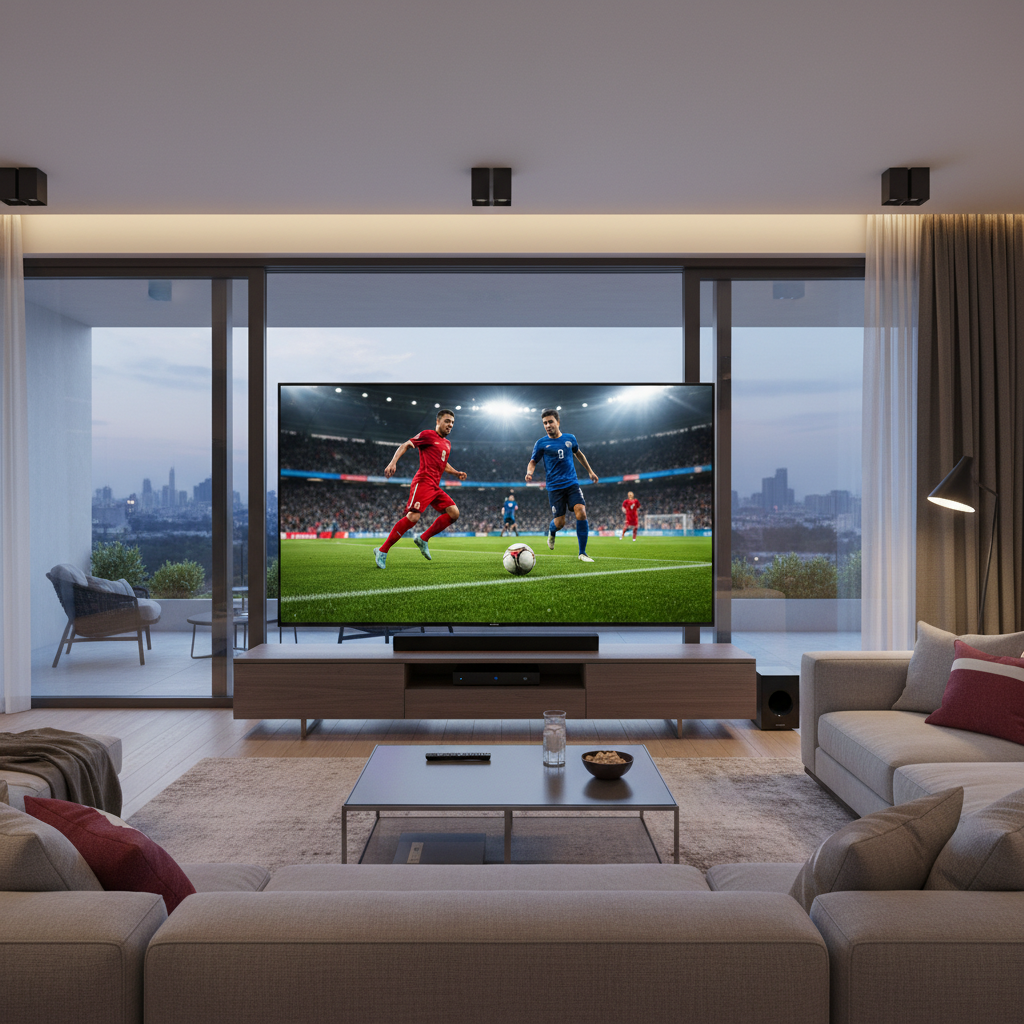
Stepping into the world of 4K televisions can be a daunting experience, with a myriad of brands and technologies vying for your attention. For many, the allure of crisp, detailed 4K resolution is undeniable, but the price tag can often be a significant barrier. This is where Skyworth 4K Android TVs frequently enter the conversation, promising a high-definition experience without breaking the bank. But the question remains: is a Skyworth 4K Android TV truly a smart and affordable choice, or are you sacrificing too much for the lower price? This comprehensive review dives deep into Skyworth’s offerings, helping you determine if these budget-friendly sets deliver on their promise of quality and value.
Factors to Consider When Buying a 4K TV
Before we examine Skyworth’s specific models, understanding the core elements that define a great 4K TV experience is crucial. These factors apply universally, regardless of brand, and will provide a framework for evaluating any television purchase.
What is 4K Resolution and Why Does It Matter?
|
Our Picks for the Best 4K TV in 2026
As an Amazon Associate I earn from qualifying purchases.
|
||
| Num | Product | Action |
|---|---|---|
| 1 | Samsung 55-Inch Class QLED Q7F Series Samsung Vision AI Smart TV (2025 Model, 55Q7F) Quantum HDR, Object Tracking Sound Lite, Q4 AI Gen1 Processor, 4K upscaling, Gaming Hub, Alexa Built-in |

|
| 2 | TOSHIBA 43" Class C350 Series LED 4K UHD Smart Fire TV, Voice Remote with Alexa, Free & Live TV |
|
| 3 | Roku Smart TV – 55-Inch Select Series, 4K HDR TV – Roku TV with Enhanced Voice Remote – Flat Screen LED Television with Wi-Fi for Streaming Live Local News, Sports, Family Entertainment |
|
| 4 | Samsung 65-Inch Class QLED Q7F Series Samsung Vision AI Smart TV (2025 Model, 65Q7F) Quantum HDR, Object Tracking Sound Lite, Q4 AI Gen1 Processor, 4K upscaling, Gaming Hub, Alexa Built-in |
|
| 5 | Hisense 43" Class A7 Series (43A7NF, 2025 Model) 4K UHD Smart Fire TV, Voice Remote with Alexa, Wide Color Gamut, HDR10+, Dolby Vision, Dolby Atmos, Game Mode, ALLM, Stream Live TV Without Cable |
|
| 6 | INSIGNIA 50" Class F50 Series LED 4K UHD Smart Fire TV, Voice Remote with Alexa, Stream Live TV Without Cable |
|
| 7 | TCL 55 Inch Class T7 Series | 4K QLED HDR | 55T7, 2025 Model | 120HZ Refresh Rate High Brightness Smart Google TV Dolby Atmos Audio | Voice Remote Alexa Gaming Streaming Television |
|
| 8 | INSIGNIA 43" Class F50 Series LED 4K UHD Smart Fire TV, Voice Remote with Alexa, Stream Live TV Without Cable |
|
| 9 | Samsung 65-Inch Class Crystal UHD U8000F 4K Smart TV (2025 Model) Endless Free Content, Crystal Processor 4K, MetalStream Design, Knox Security, Alexa Built-in |
|
| 10 | Samsung 55-Inch Class Crystal UHD U8000F 4K Smart TV (2025 Model) Endless Free Content, Crystal Processor 4K, MetalStream Design, Knox Security, Compatible with Alexa |
|
4K resolution, also known as Ultra High Definition (UHD), boasts a display of 3840 x 2160 pixels. This is four times the pixel count of a Full HD (1920 x 1080) television, meaning a significantly sharper and more detailed image. The importance of 4K lies in its ability to render incredibly fine details, making content appear more lifelike and immersive, especially on larger screens. While Full HD was once the standard, 4K has become the benchmark for a truly modern viewing experience, offering enhanced clarity and depth.
Suitable Screen Size
Choosing the right screen size is pivotal for an optimal viewing experience, as it directly impacts immersion and comfort. The ideal size largely depends on your room dimensions and typical viewing distance. A general guideline suggests that for a truly cinematic feel, you should aim for a screen size that fills a good portion of your field of vision without causing eye strain. For instance, in smaller rooms, a 43-inch or 50-inch TV might be perfect, while larger living spaces can comfortably accommodate 65-inch or even 75-inch models. A TV that is too large for a small room can overwhelm the space, while one that is too small in a grand room can feel underwhelming.
Display Technology (LED, OLED, QLED)
The panel technology at the heart of your 4K TV significantly influences picture quality, dictating everything from color vibrancy to black levels.
- LED TVs (Light Emitting Diode) are the most common and affordable, using an LED backlight to illuminate the pixels. They offer good brightness and are generally cost-effective.
- OLED TVs (Organic Light Emitting Diode) are renowned for their perfect black levels, infinite contrast, and wide viewing angles, as each pixel emits its own light. This results in incredibly vibrant and realistic images, though they typically come at a premium price.
- QLED TVs (Quantum Dot Light Emitting Diode) are a variation of LED technology that uses a quantum dot layer to enhance color and brightness. QLEDs offer superior brightness and a wider color gamut compared to standard LEDs, making colors exceptionally vivid.
HDR (High Dynamic Range) Features
High Dynamic Range (HDR) is a crucial advancement that dramatically improves the contrast and color accuracy of your television. It expands the range of both light and dark tones that a TV can display, resulting in brighter whites, deeper blacks, and a far richer spectrum of colors. Various HDR standards exist, including HDR10, HDR10+, and Dolby Vision, each offering enhanced metadata for optimizing picture quality scene by scene. To fully appreciate the benefits of HDR, ensure your TV supports popular standards like Dolby Vision and that you’re watching HDR-compatible content from streaming services or Blu-ray discs.
Refresh Rate
The refresh rate of a television, measured in Hertz (Hz), indicates how many times the screen updates per second. A higher refresh rate translates to smoother motion, which is particularly beneficial for fast-paced content like sports and action movies, and especially critical for gaming. While a standard 60Hz refresh rate is sufficient for most general viewing, a 120Hz panel provides a noticeably fluid experience, minimizing motion blur and stutter. Some TVs also employ motion interpolation technologies to enhance perceived smoothness, though this can sometimes introduce an artificial “soap opera effect.”
Connectivity Ports and Other Features
Modern 4K TVs are more than just displays; they are central hubs for your entertainment ecosystem. Essential connectivity options include multiple HDMI ports, ideally with at least some supporting the HDMI 2.1 standard for next-generation gaming consoles and high-bandwidth content. USB ports are useful for connecting external storage or accessories. As smart TVs, they should offer built-in Wi-Fi and Ethernet for internet access, enabling access to a vast array of streaming applications. Features like Bluetooth, voice control (via Google Assistant or similar), and built-in Chromecast further enhance convenience and integrate the TV seamlessly into your smart home.
Skyworth 4K Android TV: A Detailed Review
Skyworth has carved out a niche in the market by offering competitive features at attractive price points, making their 4K Android TVs a strong contender for budget-conscious consumers. These televisions often aim to deliver “affordable excellence,” providing many premium functionalities without the associated high cost.
The brand’s identity is largely centered around accessibility and smart integration. Skyworth TVs typically run on either Android TV or the newer Google TV operating system, granting users immediate access to the Google Play Store and a wealth of streaming applications like Netflix, YouTube, and Amazon Prime Video. This smart platform also incorporates Google Assistant for convenient voice control and built-in Chromecast for seamless content sharing from mobile devices. This commitment to a robust smart TV experience is a significant draw, often found in more expensive models.
When it comes to picture quality, Skyworth’s 4K Android TVs provide a sharp 3840 x 2160 resolution, as expected from any 4K set. Many models feature HDR support, including HDR10 and HLG, with some newer QLED and OLED offerings even incorporating Dolby Vision, significantly enhancing contrast and color vibrancy. Skyworth’s proprietary “Chameleon Extreme” video processing engine, sometimes featuring AI image enhancements, works to optimize visuals, upscale lower-resolution content, and reduce digital noise, aiming for a clearer and more lifelike image.
In terms of display technology, Skyworth offers a range. While many budget models utilize traditional LED panels, often with IPS technology for wider viewing angles, the brand has increasingly invested in QLED technology. Skyworth QLED TVs, such as the Q8500G or Q6600H series, leverage quantum dots to deliver superior brightness and a broader, more accurate color gamut, often rivaling more established brands in color reproduction. Some advanced QLED models even boast features like non-reflective matte surfaces for improved viewing in varied lighting conditions, and occasionally, built-in subwoofers for a more immersive audio experience.
Speaking of audio, Skyworth TVs generally provide decent sound quality, often supporting Dolby Audio and DTS Studio Sound for an enhanced cinematic experience. While the built-in speakers, typically down-firing, offer clean and balanced sound suitable for smaller rooms, audiophiles or those with larger spaces might consider pairing their TV with an external soundbar for a fuller, more impactful audio presence.
For gamers, newer Skyworth 4K Android TV models are becoming increasingly appealing. While many maintain a standard 60Hz refresh rate, some QLED sets are now equipped with 120Hz panels or “120Hz turbo mode,” along with features like low input latency, making them more suitable for modern gaming consoles. However, it’s important to note that full HDMI 2.1 support, which is critical for 4K@120Hz gaming, might not be universally available across all budget-friendly Skyworth models.
Connectivity is generally comprehensive, with multiple HDMI ports (a mix of 2.0 and sometimes 2.1 on newer models), USB ports (both 2.0 and 3.0), Ethernet, and Bluetooth. Some older or more basic models might feature Wi-Fi limited to 2.4GHz, which could affect streaming performance in congested networks. Design-wise, Skyworth often emphasizes a modern aesthetic, with “borderless” or “frameless” screens and slim bezels that contribute to a high screen-to-body ratio, giving the TVs a sleek and elegant appearance.
“Skyworth TVs represent a compelling proposition for the savvy consumer. While they might not always possess the absolute cutting-edge performance of premium brands, they consistently deliver a robust feature set and commendable picture quality that far exceeds expectations for their price point. It’s a testament to how far budget televisions have come.” – Alex Chen, Lead TV Technologist
One notable aspect of Skyworth TVs is their emphasis on eye care features in some series, incorporating flicker-free technology, low blue light modes, and eye protection settings to reduce visual strain during extended viewing sessions. This thoughtful inclusion addresses a growing concern for many users. While generally offering good value, some users have reported occasional menu lag on certain models, particularly with more demanding 4K content, and it’s worth managing expectations regarding software update longevity compared to top-tier manufacturers. Despite these minor considerations, Skyworth continues to refine its offerings, proving that high-quality 4K Android TV experiences can indeed be accessible.
Tips for Choosing the Right 4K TV for Your Needs
Selecting the perfect 4K TV involves more than just picking the largest screen or the cheapest price tag. A thoughtful approach ensures your investment aligns with your specific viewing habits and lifestyle.
Determine Usage Needs
Understanding how you plan to use your TV is the foundational step in making an informed decision. If your primary goal is to enjoy cinematic movies and TV shows, prioritize excellent contrast, accurate colors, and strong HDR performance. For avid gamers, a high refresh rate (120Hz), low input lag, and HDMI 2.1 ports are crucial for a smooth and responsive experience. If sports are your passion, look for superior motion handling to minimize blur during fast-paced action. Consider who will be using the TV – a family with diverse viewing habits might benefit from a versatile smart platform, while a personal setup could allow for more specialized choices. Finally, establish a realistic budget, as this will naturally guide your choices within the vast 4K TV market.
Research and Compare Different TV Models
Once you’ve identified your primary usage needs, delve into thorough research and comparison of various TV models. Begin by consulting reputable technology reviews from experts and publications, as they often provide objective insights into performance metrics, picture quality, and smart features. Pay close attention to user reviews as well, as these can offer practical perspectives on everyday usability and long-term reliability. Directly compare technical specifications such as resolution, refresh rate, HDR formats supported, and display technology across different models. This diligent approach will highlight the strengths and weaknesses of each option, enabling you to narrow down choices that truly meet your criteria.
Thoroughly Check the TV Before Purchasing
Before finalizing your purchase, it’s highly advisable to perform a physical inspection of the television, especially if buying from a physical store. Carefully examine the screen for any cosmetic imperfections such as scratches, dead pixels, or uneven backlighting that could detract from your viewing experience. Test all available connectivity ports, including HDMI and USB, to ensure they are fully functional and that cables fit securely. Request a demonstration from the sales assistant to observe the TV’s key features in action, paying attention to picture quality, sound performance, and the responsiveness of the smart TV interface. This hands-on check helps confirm that the TV meets your expectations and is free from defects.
Skyworth 4K TV Buying Guide
Navigating the array of 4K TVs, especially from a brand like Skyworth known for its value, requires a clear understanding of what truly matters for your specific setup. Skyworth positions itself as a strong contender in the mid-range and budget segments, offering feature-rich televisions that often outperform their price tags.
When considering a Skyworth 4K Android TV, prioritize the following factors:
- Picture Quality vs. Price: Skyworth generally offers respectable picture quality, with vivid colors and deep blacks, especially in their QLED models that support Dolby Vision and HDR10+. If you prioritize excellent contrast and brightness for cinematic viewing but are on a budget, a Skyworth QLED could be an ideal choice. Their “Chameleon Extreme” processing helps in upscaling and overall image enhancement.
- Smart Features & Operating System: A major advantage of Skyworth TVs is their integration with Android TV or Google TV. This provides a user-friendly interface, access to a vast app library, built-in Chromecast, and Google Assistant for voice control. This seamless smart experience is a strong selling point for those who want a central hub for all their streaming and smart home needs.
- Gaming Performance: For gamers, look for Skyworth models that boast a 120Hz refresh rate and low input latency. While some older models might have limited HDMI 2.1 ports, newer QLED series are often better equipped to handle modern consoles at 4K resolution. Confirm specific HDMI 2.1 support if high-frame-rate gaming is a priority.
- Sound Quality: Many Skyworth TVs incorporate Dolby Audio and DTS Studio Sound, providing a decent audio experience for everyday viewing. However, for a truly immersive soundstage, especially in larger rooms, investing in a separate soundbar is a recommended upgrade. Some premium Skyworth QLEDs even include integrated subwoofers for improved bass.
- Design and Build: Skyworth often delivers a modern aesthetic with slim bezels and sleek designs that can easily blend into various home décors. While some cost-saving measures might be noticeable in the build materials compared to flagship brands, the overall appearance is generally premium.
- Connectivity: Ensure the TV has enough HDMI and USB ports for all your devices. Check if Wi-Fi supports both 2.4GHz and 5GHz bands for more stable streaming, as some budget models may be limited to 2.4GHz.
For different needs and budgets, here are some recommendations within the Skyworth lineup:
- Budget-Conscious Viewer: An entry-level Skyworth 4K LED Android TV (e.g., from the SUC series) offers excellent value, providing core 4K resolution and a full smart TV experience for streaming and general entertainment.
- Movie Enthusiast: Consider a Skyworth QLED 4K TV with Dolby Vision support. These models provide significantly improved color accuracy, brightness, and contrast for a more cinematic viewing experience without the OLED price tag.
- Casual Gamer: Look for a Skyworth 4K Android TV that features a 120Hz refresh rate (or “turbo mode”) and low input lag, along with at least one HDMI 2.1 port, for a smoother and more responsive gaming experience.
Skyworth TVs generally offer good repairability scores due to modular components, which can be a beneficial long-term aspect. While they may not always match the multi-year software update cycles of premium brands, they provide a reliable platform for several years. Ultimately, Skyworth 4K Android TVs offer a compelling blend of features, performance, and affordability, making them a strong option for those seeking a quality viewing experience without a premium price tag.
Conclusion
Skyworth 4K Android TVs present a compelling case for consumers seeking a feature-rich, high-resolution television without the hefty price tag often associated with premium brands. While they might not always outperform top-tier models in every single metric, they consistently deliver a robust 4K experience, enhanced by the versatile Android TV or Google TV platform. With good picture quality, comprehensive smart features like Google Assistant and Chromecast, and an increasing focus on display technologies like QLED, Skyworth has firmly established itself as a value leader in the market.
For those prioritizing an immersive 4K display, smart functionality, and modern design within a budget, Skyworth offers a smart and reliable solution. The blend of impressive visuals, smart connectivity, and accessible pricing makes them an excellent choice for a wide array of users, from casual viewers to moderate gamers. Ultimately, Skyworth 4K Android TVs challenge the notion that quality always comes with a premium.
Are you ready to elevate your home entertainment without compromising your budget?
Frequently Asked Questions
Is Skyworth a reliable TV brand for 4K content?
Yes, Skyworth is generally considered a reliable brand in the budget and mid-range segment, offering respectable 4K resolution, decent picture quality, and consistent smart TV functionality for streaming and general viewing needs. They aim to provide good value for money.
Do Skyworth 4K Android TVs support popular streaming apps like Netflix and YouTube?
Absolutely. Skyworth 4K Android TVs come with either the Android TV or Google TV operating system, providing direct access to the Google Play Store. This allows users to download and enjoy a vast array of popular streaming applications, including Netflix, YouTube, Amazon Prime Video, and many others.
What kind of HDR performance can I expect from a Skyworth 4K TV?
Many Skyworth 4K TVs support common HDR formats like HDR10 and HLG. Newer and higher-end QLED models often include Dolby Vision, which significantly enhances contrast, color accuracy, and brightness for a more dynamic and immersive viewing experience.
Are Skyworth 4K TVs good for gaming?
Skyworth TVs can be suitable for casual gaming. For more serious gamers, look for specific QLED models that feature a 120Hz refresh rate and low input latency. Some newer models also offer HDMI 2.1 ports, which are beneficial for next-generation console gaming at higher resolutions and frame rates.
How does Skyworth compare to other budget 4K TV brands like TCL or Hisense?
Skyworth competes directly with brands like TCL and Hisense in the affordable 4K TV market. All three offer strong value, good smart platforms, and increasingly advanced display technologies like QLED. Skyworth often stands out for its robust Android TV integration and competitive pricing, making it a worthy alternative to explore.
Do Skyworth 4K Android TVs have built-in Chromecast?
Yes, Skyworth 4K Android TVs typically feature built-in Chromecast. This allows users to effortlessly cast content, photos, and videos directly from their smartphone, tablet, or computer to the larger TV screen, enhancing connectivity and ease of use for content sharing.
What are the main benefits of choosing a Skyworth 4K Android TV?
The primary benefits of a Skyworth 4K Android TV include its competitive pricing, sharp 4K picture quality, and comprehensive smart features provided by Android TV/Google TV. Users gain access to a wide array of apps, voice control via Google Assistant, built-in Chromecast, and increasingly advanced display technologies like QLED.