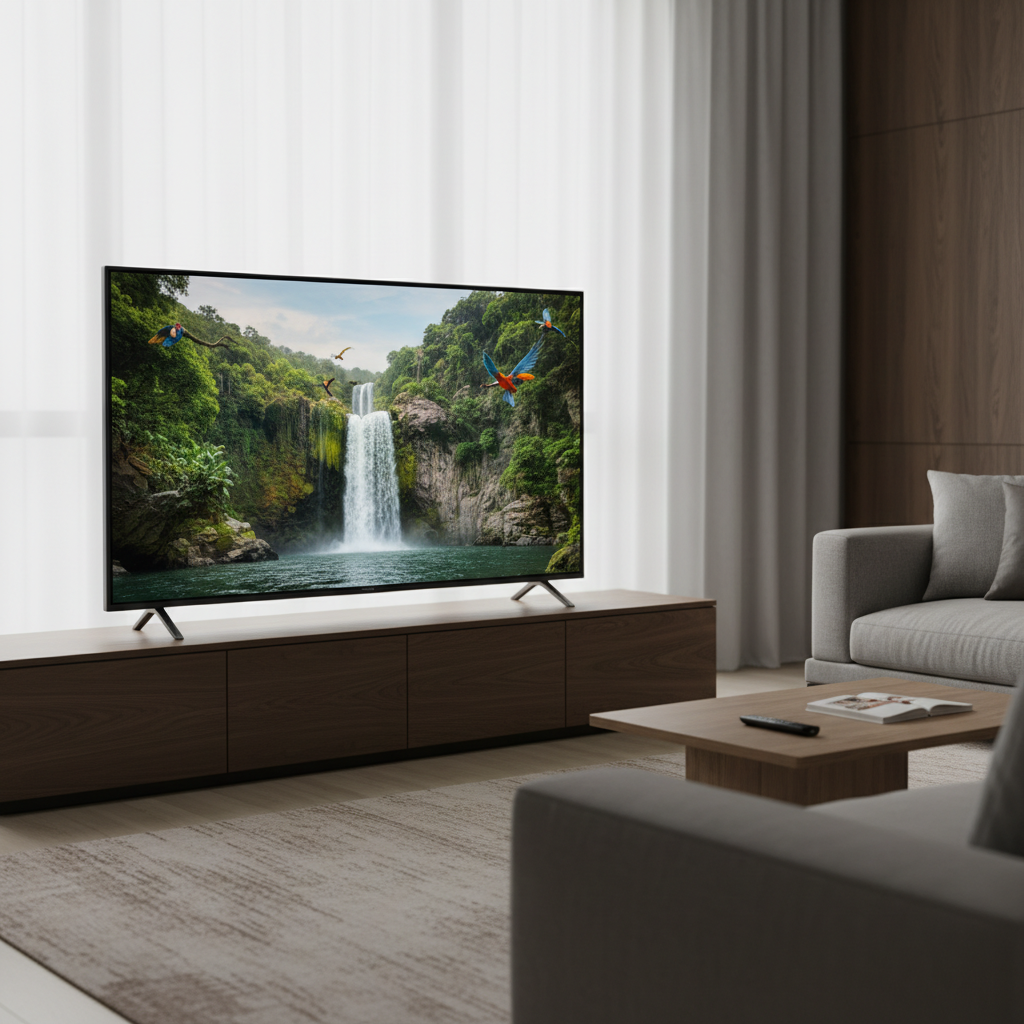
Navigating the vast landscape of 4K televisions can feel overwhelming, especially with countless models promising cinematic experiences. If you’re seeking an affordable gateway to stunning 4K visuals and a seamless smart TV platform, the JVC 4K HDR Smart TV with Roku Built-in often catches the eye. This review dives deep into what makes these televisions a compelling option for many households, balancing advanced features with a practical price point. We’ll explore its picture prowess, smart capabilities, and overall value, helping you decide if this JVC model is the perfect fit for your entertainment needs and budget.
Understanding Your 4K TV Purchase
Before we delve into the specifics of the JVC 4K HDR Smart TV, let’s establish a foundational understanding of key television technologies that influence your viewing experience. Knowing these aspects will empower you to make an informed decision, ensuring your chosen TV aligns perfectly with your expectations.
What is 4K Resolution and Why Does It Matter?
|
Our Picks for the Best 4K TV in 2026
As an Amazon Associate I earn from qualifying purchases.
|
||
| Num | Product | Action |
|---|---|---|
| 1 | Samsung 55-Inch Class Crystal UHD U8000F 4K Smart TV (2025 Model) Endless Free Content, Crystal Processor 4K, MetalStream Design, Knox Security, Compatible with Alexa |

|
| 2 | Samsung 65-Inch Class QLED Q7F Series Samsung Vision AI Smart TV (2025 Model, 65Q7F) Quantum HDR, Object Tracking Sound Lite, Q4 AI Gen1 Processor, 4K upscaling, Gaming Hub, Alexa Built-in |
|
| 3 | TOSHIBA 43" Class C350 Series LED 4K UHD Smart Fire TV, Voice Remote with Alexa, Free & Live TV |
|
| 4 | Hisense 43" Class A7 Series (43A7NF, 2025 Model) 4K UHD Smart Fire TV, Voice Remote with Alexa, Wide Color Gamut, HDR10+, Dolby Vision, Dolby Atmos, Game Mode, ALLM, Stream Live TV Without Cable |
|
| 5 | INSIGNIA 43" Class F50 Series LED 4K UHD Smart Fire TV, Voice Remote with Alexa, Stream Live TV Without Cable |
|
| 6 | TCL 55 Inch Class T7 Series | 4K QLED HDR | 55T7, 2025 Model | 120HZ Refresh Rate High Brightness Smart Google TV Dolby Atmos Audio | Voice Remote Alexa Gaming Streaming Television |
|
| 7 | Samsung 65-Inch Class Crystal UHD U8000F 4K Smart TV (2025 Model) Endless Free Content, Crystal Processor 4K, MetalStream Design, Knox Security, Alexa Built-in |
|
| 8 | Samsung 55-Inch Class QLED Q7F Series Samsung Vision AI Smart TV (2025 Model, 55Q7F) Quantum HDR, Object Tracking Sound Lite, Q4 AI Gen1 Processor, 4K upscaling, Gaming Hub, Alexa Built-in |
|
| 9 | INSIGNIA 50" Class F50 Series LED 4K UHD Smart Fire TV, Voice Remote with Alexa, Stream Live TV Without Cable |
|
| 10 | Roku Smart TV – 55-Inch Select Series, 4K HDR TV – Roku TV with Enhanced Voice Remote – Flat Screen LED Television with Wi-Fi for Streaming Live Local News, Sports, Family Entertainment |
|
4K resolution, also known as Ultra HD (UHD), refers to a display standard with 3840 x 2160 pixels. This translates to approximately eight million pixels in total, which is four times the pixel count of Full HD (1920 x 1080) televisions. The significance of 4K lies in its ability to render incredibly sharp, detailed images, making content appear more lifelike and immersive, especially on larger screens. While some JVC Roku models might be Full HD, the 4K versions deliver a noticeable upgrade in clarity and fine detail, allowing you to see nuances in your favorite movies and shows that might otherwise be missed.
Choosing the Right Screen Size
Selecting the appropriate screen size is crucial for an optimal viewing experience. A TV that’s too small might leave you straining to see details, while one that’s too large could overwhelm your space and make individual pixels noticeable. To determine the ideal size, consider your room dimensions and typical viewing distance. Generally, for a 4K TV, you can sit closer to the screen than with a Full HD TV without perceiving individual pixels. For instance, a 55-inch 4K TV is often recommended for viewing distances between 5.5 and 11 feet, providing an immersive feel without compromising picture quality.
Display Technology: LED, OLED, QLED
The JVC 4K HDR Smart TV primarily utilizes LED (Light Emitting Diode) display technology, which is common in budget-friendly 4K TVs. LED TVs use an LCD (Liquid Crystal Display) panel illuminated by LEDs. These can be either edge-lit or direct-lit. While LED TVs offer good brightness and are generally more affordable, they may not achieve the perfect blacks and infinite contrast ratios found in OLED (Organic Light Emitting Diode) panels, which illuminate each pixel individually. QLED (Quantum-dot Light Emitting Diode) TVs, often seen in higher-end models from other brands, enhance LED technology with quantum dots to produce brighter and more vibrant colors. The JVC models offer solid picture quality for their price point within the LED category.
High Dynamic Range (HDR) Capabilities
High Dynamic Range (HDR) is a picture technology that significantly expands the range of both contrast and color. This means HDR content displays brighter whites, deeper blacks, and a wider, more vibrant spectrum of colors than standard dynamic range (SDR) content. The JVC 4K HDR Smart TV supports common HDR formats like HDR10 and HLG (Hybrid Log-Gamma), which enhance the visual depth and realism of compatible content. While JVC’s HDR performance is generally good for its price, some budget LED TVs might not achieve the peak brightness levels of premium models, which can limit the full impact of HDR in very bright scenes. However, it still offers a noticeable improvement over non-HDR displays.
Refresh Rate for Smooth Viewing
The refresh rate of a television, measured in Hertz (Hz), indicates how many times the screen updates its image per second. A 60Hz refresh rate, commonly found in JVC 4K HDR Smart TVs, means the screen refreshes 60 times per second. This is perfectly suitable for most general viewing, including movies, TV shows, and casual gaming. For fast-paced action or competitive gaming, higher refresh rates like 120Hz or more are often preferred to minimize motion blur and ensure smoother transitions. However, for everyday entertainment, the 60Hz panel on JVC models provides a perfectly acceptable and fluid visual experience.
Connectivity and Smart Features
Modern 4K TVs are entertainment hubs, and connectivity is key. JVC 4K HDR Smart TVs typically come equipped with essential ports such as multiple HDMI inputs (often three), USB ports, and Wi-Fi connectivity. The HDMI ports allow you to connect various devices like game consoles, Blu-ray players, and soundbars.
The “Smart” aspect comes from the integrated Roku operating system. Roku TV is renowned for its user-friendliness and extensive content library. It provides access to a massive selection of free, live, and premium streaming channels, organizing all your streaming services in one intuitive interface. You can easily customize your home screen, access popular voice assistants (like Amazon Alexa and Google Assistant, though not built-in), and even use your smartphone as a remote with private listening capabilities through the Roku app. This robust smart platform is a significant advantage, offering a comprehensive and continuously updated streaming experience.
A Closer Look: JVC 4K HDR Smart TV (Roku Built-in)
The JVC 4K HDR Smart TV with Roku Built-in aims to deliver a feature-rich experience without the premium price tag. Let’s break down its performance and features.
Picture Quality and HDR Performance
JVC 4K HDR Smart TVs offer a clear and sharp picture, with customer reviews often highlighting good color quality and vivid images. Many models feature a native Ultra HD (4K) resolution of 3840 x 2160 pixels, ensuring detailed visuals for native 4K content. The inclusion of HDR10 and HLG support enhances contrast and color, contributing to a more vibrant and realistic picture.
However, as with most budget LED TVs, there are some limitations. While the contrast ratio can be respectable, particularly in SDR mode (around 5,300:1), the peak brightness for HDR content may not reach the levels of higher-end TVs. Some reviews indicate peak brightness in HDR mode around 379-400 cd/m², which is decent but might not fully realize the specular highlights of certain HDR content. Additionally, being edge-lit LCD panels, some models might exhibit minor backlight blooming or unevenness in darker scenes. To get the best out of the picture, you might find that adjusting the color temperature to a “Warm” setting or selecting a “Film” preset improves overall color accuracy, which can sometimes be a bit cool out of the box.
Sound Experience
The audio performance of JVC Roku TVs is generally described as adequate for everyday use. Many models incorporate Dolby Digital Plus, which helps provide a more immersive audio experience. For family viewing, some JVC TVs may include a built-in soundbar, enhancing dialogue clarity and overall sound projection, a beneficial feature for households where clear audio is a priority. While it may not rival external sound systems, the integrated sound is suitable for general TV watching. For those seeking a more robust audio experience, the presence of HDMI ARC (Audio Return Channel) on at least one HDMI port allows for easy connection to a soundbar or AV receiver.
Roku OS: Smart Features and User Experience
The Roku OS is arguably one of the standout features of JVC Smart TVs. It’s renowned for its simplicity, speed, and extensive content ecosystem. The interface is clean, intuitive, and highly customizable, allowing you to arrange your favorite streaming channels for quick access. With Roku built-in, you gain access to thousands of streaming apps, including all major services and niche content, often with automatic software updates in the background, ensuring your TV stays current and smoothly running. The Roku mobile app further enhances the experience, allowing your phone to serve as a remote, facilitate content search, and even enable private listening through headphones—perfect for late-night viewing without disturbing others. This integrated smart platform provides a comprehensive and hassle-free entertainment hub.
Design and Build Quality
JVC 4K HDR Smart TVs typically feature a functional and aesthetically pleasing design. Some models boast a “frameless bezel” design, which minimizes borders and provides a more expansive, modern look. As a brand often positioned in the budget category, JVC TVs are generally well-built, offering reliable performance without major flaws. The brand often licenses its name to manufacturers, with quality varying slightly by region (e.g., European models produced by Vestel are often considered quite decent). While not aiming for a premium aesthetic, they offer a solid and practical build suitable for daily use.
Connectivity Options
Most JVC 4K HDR Smart TVs come with three HDMI inputs, a USB port, Wi-Fi, and an Ethernet port. While some earlier or smaller Full HD JVC Roku models might use HDMI 1.4, which can limit HDR from external devices, newer 4K models typically include HDMI 2.0 or later, which is essential for full 4K HDR passthrough. The presence of at least one HDMI ARC port is standard, simplifying connections to soundbars. The USB port allows for media playback and sometimes “Live TV pause” functionality. These connectivity options ensure you can hook up your essential devices and enjoy a variety of content sources.
Comparing JVC Roku 4K TVs to Competitors
When considering a budget 4K Roku TV, JVC competes with other popular brands like TCL and Hisense. These brands often offer compelling value, and a brief comparison can highlight JVC’s position.
| Feature | JVC 4K HDR Roku TV (e.g., Select/Premier Series) | TCL 4-Series Roku TV (Budget) | Hisense A6 Series Roku TV (Budget) |
|---|---|---|---|
| Resolution | 4K UHD (3840 x 2160) | 4K UHD (3840 x 2160) | 4K UHD (3840 x 2160) |
| Display Panel | LED LCD (often VA, direct LED backlight) | LED LCD (VA panel, direct LED backlight) | LED LCD (VA panel, direct LED backlight) |
| HDR Support | HDR10, HLG | HDR10, HLG | HDR10, HLG, often Dolby Vision |
| Peak Brightness | ~370-400 cd/m² (budget range) | ~250-300 cd/m² (typically lower) | ~300-400 cd/m² (variable by model) |
| Refresh Rate | 60Hz Native | 60Hz Native | 60Hz Native |
| Smart OS | Roku Built-in | Roku Built-in | Roku Built-in |
| HDMI Ports | 3 (often HDMI 2.0 on 4K models) | 3-4 (HDMI 2.0) | 3-4 (HDMI 2.0) |
| Price Point | Highly competitive, budget-friendly | Highly competitive, often slightly lower | Competitive, good value for features |
| Typical Review | Good value, easy Roku OS, decent picture | Strong budget option, good smart features | Often praised for including Dolby Vision HDR |
“For budget-conscious buyers, the JVC Roku TV provides a robust smart platform and solid 4K picture quality, often standing out for its straightforward user experience.” – Admin, ReviewDN.com
Tips for Choosing Your Ideal 4K TV
Selecting the perfect 4K TV requires a thoughtful approach, combining research with personal preference. Here are some tips to guide you.
Assess Your Entertainment Needs
Start by defining how you’ll primarily use your TV. Are you a cinephile who prioritizes deep blacks and cinematic color accuracy for movies? Do you need low input lag and a fast refresh rate for competitive gaming? Or perhaps you’re a sports enthusiast who wants smooth motion and a bright picture for daytime viewing? Understanding these needs will help you prioritize features. For instance, if gaming is crucial, researching specific models’ input lag performance is more important than if your primary use is streaming documentaries. The JVC 4K HDR Roku TV excels as a general-purpose entertainment hub, perfect for streaming and casual viewing.
Research and Compare Models
Once you have a clear idea of your needs, dive into research. Read professional reviews from reputable tech websites, and don’t forget to consult user reviews on retail sites. Look for consistent feedback regarding picture quality, sound, smart features, and reliability. Pay close attention to specifications like native resolution (ensuring it’s truly 4K), HDR format support, and HDMI versions. Compare specific JVC models with similar offerings from brands like TCL and Hisense within your budget, noting any differences in panel technology, brightness, or advanced HDR support like Dolby Vision.
In-Store Demo and Pre-Purchase Checks
While online research is invaluable, nothing beats seeing a TV in person. Visit electronics stores to view different models side-by-side. Pay attention to how the picture looks under various lighting conditions and with different types of content. Check for screen uniformity, viewing angles, and overall build quality. Before purchasing, especially if buying in-store, inspect the unit for any physical damage. Ask the sales associate to demonstrate key features and confirm that all ports are functional. This hands-on experience can often reveal subtle differences that online reviews might not fully convey, solidifying your decision.
Conclusion
The JVC 4K HDR Smart TV with Roku Built-in presents a compelling package for consumers seeking a feature-rich 4K television without breaking the bank. It delivers clear 4K resolution, enhanced contrast and color through HDR10 and HLG support, and a highly intuitive smart experience powered by the acclaimed Roku OS. While it operates within the limitations of budget-friendly LED technology, it offers solid picture quality, adequate sound, and seamless access to a world of streaming content. If you prioritize ease of use, a vast streaming library, and a decent 4K picture at an accessible price, a JVC Roku TV could be an excellent addition to your home. Are you ready to upgrade your viewing experience with a smart TV that truly delivers on value?
Frequently Asked Questions
Is the JVC 4K HDR Smart TV good for gaming?
The JVC 4K HDR Smart TV with a 60Hz refresh rate is suitable for casual gaming, offering a clear 4K picture and decent response times for non-competitive play. For serious or competitive gamers, a TV with a 120Hz refresh rate and advanced gaming features like VRR (Variable Refresh Rate) would provide a smoother experience, but for most, the JVC models offer a perfectly enjoyable gaming session.
What HDR formats does the JVC 4K HDR Smart TV support?
JVC 4K HDR Smart TVs typically support common High Dynamic Range (HDR) formats, including HDR10 and HLG (Hybrid Log-Gamma). These formats enhance the contrast and color spectrum, offering a more vivid and realistic picture for compatible content. While some higher-end TVs support Dolby Vision, HDR10 and HLG still provide a noticeable upgrade over standard dynamic range.
Can I connect external devices to the JVC Roku TV?
Yes, JVC Roku TVs come equipped with multiple HDMI inputs (typically three) and USB ports, allowing you to easily connect various external devices. You can hook up game consoles, Blu-ray players, soundbars, and other streaming devices. Ensure that your external devices are connected to HDMI ports that support the appropriate version (e.g., HDMI 2.0 for 4K HDR passthrough) for optimal performance.