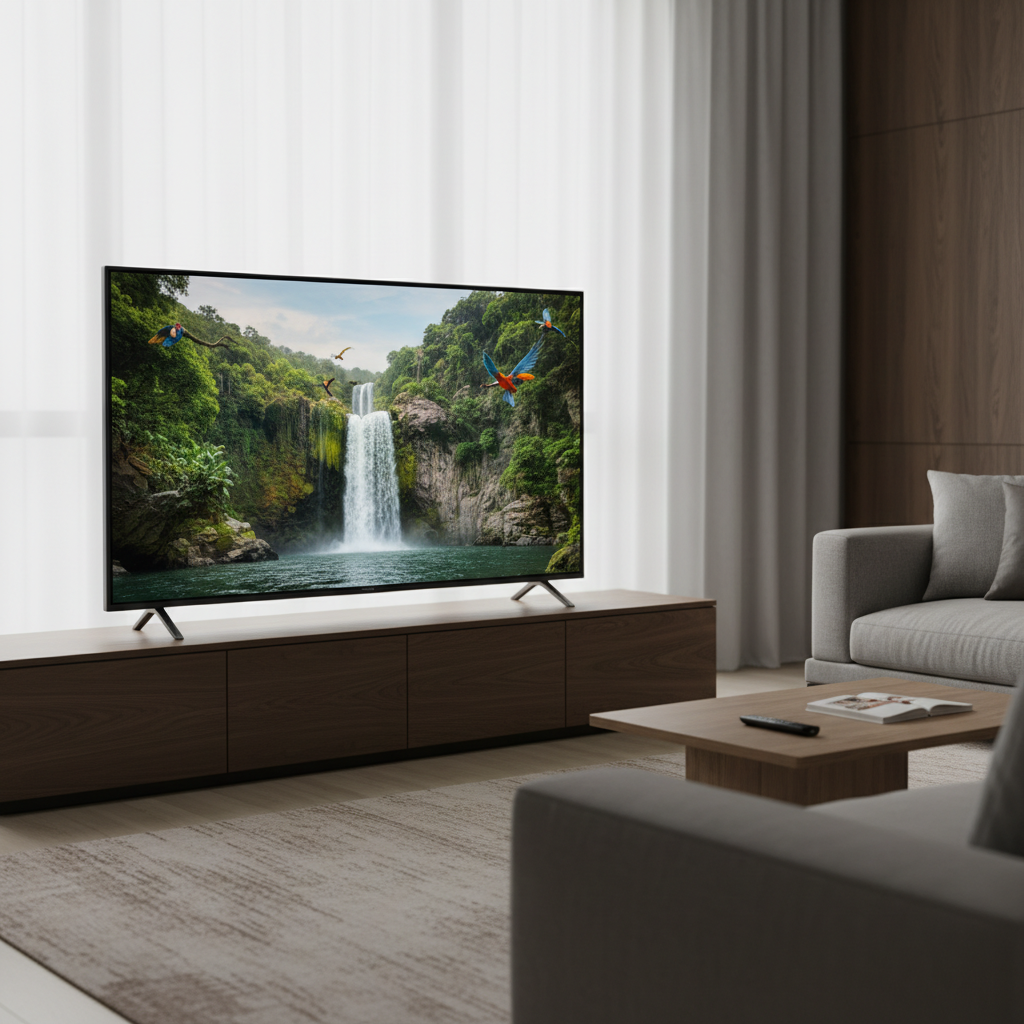
Stepping into the world of 4K TVs can be exhilarating, promising unparalleled visual fidelity and immersive experiences. However, the joy of a stunning display can quickly diminish when unwelcome glare from ambient light turns your screen into a reflective mirror. If you’ve ever struggled to see details during a bright afternoon movie or found your reflection staring back at you during a thrilling game, a 4K TV with a matte screen might be the perfect solution. These innovative displays are specifically designed to combat reflections, ensuring your content remains clear and vibrant, no matter the lighting conditions.
Understanding 4K Resolution and Its Importance
Before diving into matte screens, let’s briefly recap what makes a 4K TV so special. 4K resolution, also known as Ultra High Definition (UHD), refers to a display that has 3840 horizontal pixels and 2160 vertical pixels, totaling over 8 million pixels. This is four times the pixel count of a Full HD (1920 x 1080) television, which only has about 2 million pixels.
The sheer number of pixels in a 4K display translates directly into a picture that is incredibly sharp and detailed. You’ll notice finer textures, more distinct lines, and a greater sense of depth in your content. This increased clarity enhances everything from blockbuster movies and detailed nature documentaries to high-definition gaming, bringing a new level of realism to your viewing experience.
The Crucial Role of Matte Screens in 4K TVs
While 4K resolution delivers incredible detail, its impact can be lost if reflections obscure the screen. This is where matte screen technology becomes invaluable, transforming how you interact with your television in bright environments.
What is a Matte Screen?
|
Our Picks for the Best 4K TV in 2026
As an Amazon Associate I earn from qualifying purchases.
|
||
| Num | Product | Action |
|---|---|---|
| 1 | Samsung 55-Inch Class Crystal UHD U8000F 4K Smart TV (2025 Model) Endless Free Content, Crystal Processor 4K, MetalStream Design, Knox Security, Compatible with Alexa |

|
| 2 | Samsung 65-Inch Class Crystal UHD U8000F 4K Smart TV (2025 Model) Endless Free Content, Crystal Processor 4K, MetalStream Design, Knox Security, Alexa Built-in |
|
| 3 | TCL 55 Inch Class T7 Series | 4K QLED HDR | 55T7, 2025 Model | 120HZ Refresh Rate High Brightness Smart Google TV Dolby Atmos Audio | Voice Remote Alexa Gaming Streaming Television |
|
| 4 | Hisense 43" Class A7 Series (43A7NF, 2025 Model) 4K UHD Smart Fire TV, Voice Remote with Alexa, Wide Color Gamut, HDR10+, Dolby Vision, Dolby Atmos, Game Mode, ALLM, Stream Live TV Without Cable |
|
| 5 | INSIGNIA 50" Class F50 Series LED 4K UHD Smart Fire TV, Voice Remote with Alexa, Stream Live TV Without Cable |
|
| 6 | Roku Smart TV – 55-Inch Select Series, 4K HDR TV – Roku TV with Enhanced Voice Remote – Flat Screen LED Television with Wi-Fi for Streaming Live Local News, Sports, Family Entertainment |
|
| 7 | Samsung 55-Inch Class QLED Q7F Series Samsung Vision AI Smart TV (2025 Model, 55Q7F) Quantum HDR, Object Tracking Sound Lite, Q4 AI Gen1 Processor, 4K upscaling, Gaming Hub, Alexa Built-in |
|
| 8 | INSIGNIA 43" Class F50 Series LED 4K UHD Smart Fire TV, Voice Remote with Alexa, Stream Live TV Without Cable |
|
| 9 | TOSHIBA 43" Class C350 Series LED 4K UHD Smart Fire TV, Voice Remote with Alexa, Free & Live TV |
|
| 10 | Samsung 65-Inch Class QLED Q7F Series Samsung Vision AI Smart TV (2025 Model, 65Q7F) Quantum HDR, Object Tracking Sound Lite, Q4 AI Gen1 Processor, 4K upscaling, Gaming Hub, Alexa Built-in |
|
Unlike traditional glossy screens that act like mirrors, a matte screen incorporates a specialized anti-glare coating or a microscopic textured surface. This coating works by diffusing incoming light across the screen rather than reflecting it directly back at the viewer. Imagine light hitting a smooth, polished surface versus a finely textured one; the smooth surface bounces light back sharply, while the textured surface scatters it. This scattering effect is the core principle behind matte displays.
Why Matte Screens Matter for Glare Reduction
The primary advantage of a matte screen is its exceptional ability to reduce glare and direct reflections. In rooms with large windows, bright overhead lighting, or varying ambient light throughout the day, glossy screens can become unwatchable due to intense reflections. Matte screens, however, minimize these distractions significantly, making it far easier to see what’s happening on screen. This not only improves picture clarity but also dramatically reduces eye strain during extended viewing sessions. For those who want their TV to blend seamlessly into their living space, especially when displaying art, matte screens offer a more natural, paper-like appearance, preventing the “giant black mirror” effect when the TV is off.
Matte vs. Glossy: A Detailed Comparison
Choosing between a matte and a glossy screen involves understanding the trade-offs. Both have distinct characteristics that cater to different viewing environments and preferences.
Matte Screen Advantages
The benefits of a matte screen largely revolve around enhancing viewer comfort and picture visibility in challenging lighting conditions. Their ability to diffuse light makes them champions of glare reduction, allowing you to enjoy content without annoying reflections. This property also contributes to reduced eye strain, as your eyes aren’t constantly fighting against bright spots on the screen. Additionally, matte screens are often less prone to showing fingerprints and smudges, making them easier to maintain a clean appearance. For those using their TV as a digital art display, like Samsung’s The Frame, the matte finish gives artwork a realistic, canvas-like quality, making it appear more like a painting and less like a glowing screen.
Matte Screen Disadvantages
Despite their strengths, matte screens do come with a few potential drawbacks. The very diffusion process that reduces glare can, in some cases, lead to a slight reduction in contrast, meaning blacks may appear less deep and rich compared to a glossy screen in a perfectly dark room. This phenomenon is sometimes referred to as “black level raise.” Colors might also appear slightly more muted or natural, rather than the hyper-vivid saturation often associated with glossy displays. Some viewers might also perceive a minor softness or “haze” on the image, particularly at very close viewing distances, due to the texture of the anti-glare coating.
Glossy Screen Pros & Cons
Glossy screens are celebrated for their ability to produce incredibly vibrant colors, superior black levels, and razor-sharp image clarity, especially in controlled, dimly lit environments. Without a diffusing layer, light passes through more directly, leading to a punchier image with greater perceived depth. However, their highly reflective surface makes them highly susceptible to glare from any light source in the room, resulting in distracting mirror-like reflections. They are also prone to showing fingerprints and dust more prominently, requiring frequent cleaning.
Key Factors to Consider When Choosing a 4K Matte Screen TV
Selecting the ideal 4K matte screen TV requires a thoughtful assessment of several technical specifications and how they align with your viewing habits and environment.
Room Lighting Conditions
Your room’s ambient lighting is arguably the most critical factor. If your TV is in a bright room with ample natural light from windows, or numerous artificial light sources, a matte screen will offer a significantly more comfortable viewing experience by minimizing reflections. For dedicated home theaters or rooms with full light control, a glossy screen might be acceptable, but matte still provides a distraction-free benefit.
Screen Brightness (Nits)
While a matte coating handles reflections, high screen brightness (measured in nits) is equally crucial, especially in bright rooms. A TV with high peak brightness can punch through any residual ambient light and make the image pop, even on a matte display. Look for TVs with a high nit rating to ensure excellent visibility and impressive HDR performance in well-lit spaces.
Screen Size and Viewing Distance
The size of your TV should complement your viewing distance. For 4K TVs, sitting closer allows you to appreciate the intricate detail. However, larger screens in bright rooms emphasize reflections more, making matte coatings even more beneficial. Consider how far you typically sit from the screen and choose a size that provides an immersive experience without overwhelming your space or accentuating glare.
Display Technology (LED, OLED, QLED)
Different panel technologies approach picture quality and reflection handling uniquely.
- LED/QLED (Quantum Dot LED): These displays typically achieve very high brightness levels, which, when combined with an effective matte coating, can create an excellent viewing experience in bright rooms. QLEDs further enhance color vibrancy.
- OLED (Organic Light Emitting Diode): Known for their perfect blacks and infinite contrast, OLEDs traditionally featured glossy screens. However, some newer QD-OLED models, like certain Samsung S95 series, have introduced matte or “glare-free” coatings, offering the best of both worlds: incredible contrast and reduced reflections. This is a significant development for OLED technology in brighter environments.
HDR (High Dynamic Range)
HDR technology (including standards like HDR10, Dolby Vision, and HLG) significantly expands the range of colors and contrast a TV can display, resulting in more lifelike images. Even with a matte screen, a TV with robust HDR support will deliver a more dynamic and impactful picture. Ensure your chosen TV supports the HDR formats prevalent in your preferred content.
Refresh Rate
The refresh rate, measured in Hertz (Hz), indicates how many times the screen updates per second. Higher refresh rates (120Hz or more) provide smoother motion, which is particularly beneficial for fast-paced content like sports and video games. For casual movie watching, 60Hz is often sufficient, but for a truly fluid experience across all content, a higher refresh rate is advantageous.
Connectivity and Smart Features
Consider the number and type of ports you need. HDMI 2.1 ports are essential for next-gen gaming consoles and high-bandwidth 4K content. USB ports are handy for media playback. A good Smart TV platform (like Google TV, Samsung Tizen, or LG webOS) offers access to a vast array of streaming apps and can integrate with voice assistants, enhancing overall convenience.
Top 4K Matte Screen TVs for Glare Reduction
The market for matte screen 4K TVs has seen exciting developments, offering excellent choices for reducing glare. Here are some of the top contenders that stand out for their anti-reflective properties and overall performance:
- Samsung The Frame Series (QLED): Perhaps the most renowned matte screen TV, The Frame is designed to mimic framed artwork when off, thanks to its signature matte display. It excels at blending into any decor and significantly reduces reflections, making it perfect for bright living spaces. Available in various sizes, it offers vibrant QLED picture quality and a robust Smart TV platform.
- Samsung S95D/S95F (QD-OLED with Glare-Free/Matte Finish): A groundbreaking option, these Samsung QD-OLEDs offer a truly unique combination: the perfect blacks and vibrant colors of OLED technology paired with an effective matte anti-glare coating. This allows for an incredible picture even in brightly lit rooms, addressing a long-standing challenge for OLED displays.
- Hisense CanvasTV (QLED): Often seen as a direct competitor and more budget-friendly alternative to The Frame, the Hisense CanvasTV also features a Hi-Matte display. It delivers impressive anti-glare performance and good picture quality, making it an excellent value proposition for art lovers and those seeking reflection reduction.
- Hisense U8N/U8QG (Mini-LED): While not exclusively “matte” in the same way as The Frame or S95D, Hisense’s high-end Mini-LED TVs often boast exceptionally high peak brightness and advanced anti-reflective screen layers that perform very well in bright rooms. The Hisense U8N, for example, is lauded for its ability to overcome glare with its sheer brightness and effective reflection handling.
- TCL QM7K Series (QD-Mini LED): TCL’s QM7K series also offers strong performance in bright environments, featuring QD-Mini LED technology for high brightness and effective anti-glare coatings that help mitigate reflections. These models provide great value with impressive picture quality.
- LG G4 OLED: While LG’s traditional OLEDs have glossy screens, newer models like the G4 have improved anti-reflective coatings that, while not fully matte, are significantly better at diffusing reflections than previous generations. This makes them a strong choice if you prioritize OLED’s inherent contrast and have some control over your room’s lighting.
“For viewers tired of battling reflections, the advent of truly effective matte screens, especially on advanced OLED panels, is a game-changer. It shifts the focus back to the content, exactly where it belongs.”
Tips for Optimizing Your Viewing Experience
Even with the best matte screen TV, a few adjustments can further enhance your viewing pleasure and ensure you’re getting the most out of your investment.
Strategic TV Placement
Carefully consider where your TV is located. While a matte screen significantly reduces glare, avoiding direct sunlight or strong light sources from directly opposite the screen will always yield the best results. If possible, place your TV on an interior wall or at an angle that minimizes exposure to windows or lamps.
Control Your Lighting
Even if you choose a matte screen, intelligent lighting control in your room can still make a difference. Use curtains or blinds to manage natural light during the day. For artificial lighting, consider dimmer switches or smart lighting systems that allow you to adjust brightness and color temperature, creating the ideal ambiance for any content.
Calibrate Picture Settings
Out-of-the-box settings are rarely optimized. Take the time to calibrate your TV’s picture settings (brightness, contrast, color, sharpness) to suit your room and personal preferences. Many modern TVs offer different picture modes, such as “Cinema” or “Filmmaker Mode,” which can provide a more accurate and pleasing image. If available, explore specific “anti-glare” or “bright room” modes.
Conclusion
Choosing a 4K TV with a matte screen is an intelligent decision for anyone seeking an uncompromised viewing experience in bright or dynamic lighting conditions. These televisions address the long-standing frustration of glare, allowing the stunning detail and vibrant colors of 4K content to shine through without distraction. From dedicated art mode displays like Samsung’s The Frame to cutting-edge QD-OLEDs that now feature anti-glare finishes, there’s a matte screen TV for every preference and budget.
By understanding the benefits of matte technology, considering key features like brightness and panel type, and optimizing your viewing environment, you can select a 4K TV that delivers clarity, comfort, and immersion. Are you ready to say goodbye to distracting reflections and embrace a truly glare-free viewing future?