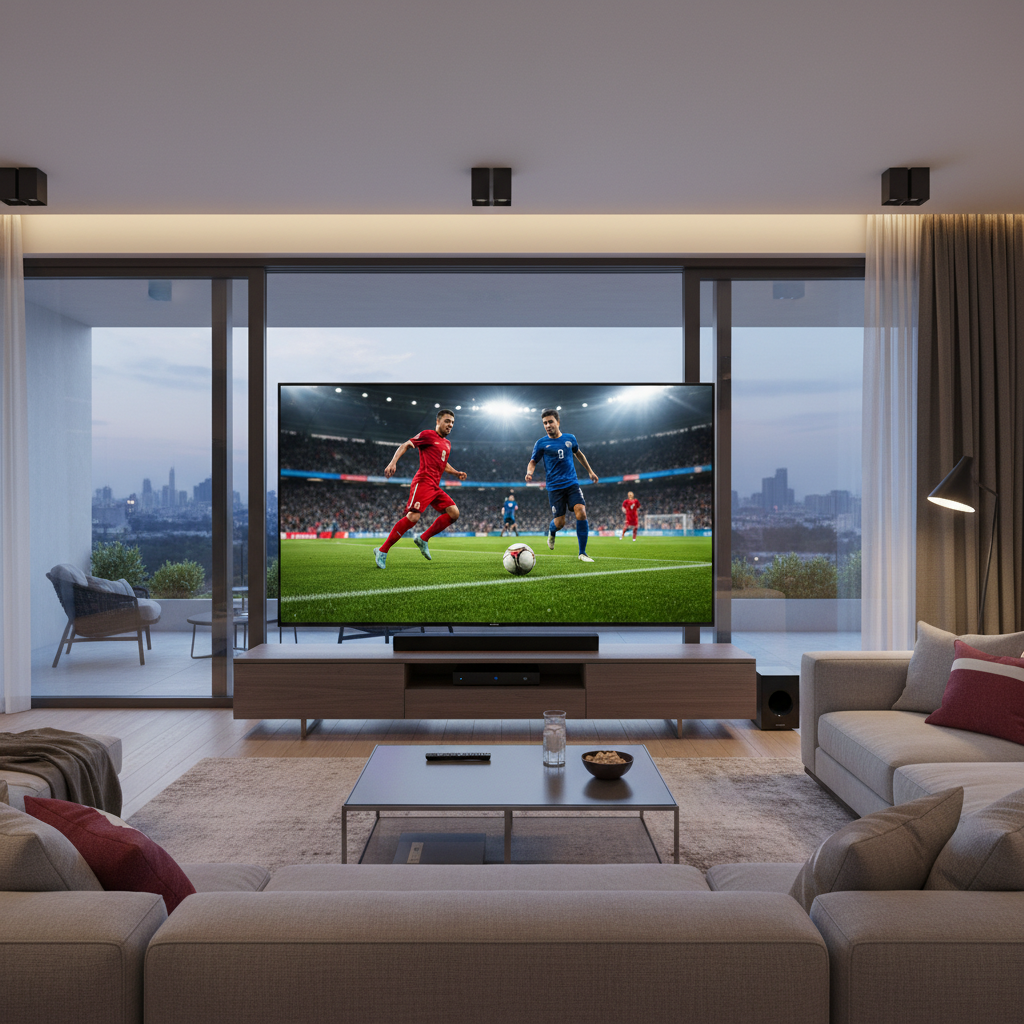
Choosing a new television for a small bedroom often presents a unique challenge: how do you get immersive 4K TV quality without overwhelming the space? It’s a common dilemma, as larger screens dominate the market, yet compact viewing areas demand thoughtful consideration. This guide will navigate the essentials, helping you select a 43-inch 4K TV that perfectly balances stunning visuals, smart features, and budget, transforming your small bedroom into a personalized entertainment hub.
Essential Factors to Consider When Buying a 4K TV
Selecting the right 4K TV for a smaller room means focusing on specifications that genuinely enhance your viewing experience in close quarters. From display clarity to smart features, every detail matters.
What is 4K Resolution and Why it Matters?
|
Our Picks for the Best 4K TV in 2026
As an Amazon Associate I earn from qualifying purchases.
|
||
| Num | Product | Action |
|---|---|---|
| 1 | Roku Smart TV – 55-Inch Select Series, 4K HDR TV – Roku TV with Enhanced Voice Remote – Flat Screen LED Television with Wi-Fi for Streaming Live Local News, Sports, Family Entertainment |

|
| 2 | TCL 55 Inch Class T7 Series | 4K QLED HDR | 55T7, 2025 Model | 120HZ Refresh Rate High Brightness Smart Google TV Dolby Atmos Audio | Voice Remote Alexa Gaming Streaming Television |
|
| 3 | Samsung 65-Inch Class QLED Q7F Series Samsung Vision AI Smart TV (2025 Model, 65Q7F) Quantum HDR, Object Tracking Sound Lite, Q4 AI Gen1 Processor, 4K upscaling, Gaming Hub, Alexa Built-in |
|
| 4 | TOSHIBA 43" Class C350 Series LED 4K UHD Smart Fire TV, Voice Remote with Alexa, Free & Live TV |
|
| 5 | INSIGNIA 43" Class F50 Series LED 4K UHD Smart Fire TV, Voice Remote with Alexa, Stream Live TV Without Cable |
|
| 6 | INSIGNIA 50" Class F50 Series LED 4K UHD Smart Fire TV, Voice Remote with Alexa, Stream Live TV Without Cable |
|
| 7 | Samsung 55-Inch Class Crystal UHD U8000F 4K Smart TV (2025 Model) Endless Free Content, Crystal Processor 4K, MetalStream Design, Knox Security, Compatible with Alexa |
|
| 8 | Samsung 65-Inch Class Crystal UHD U8000F 4K Smart TV (2025 Model) Endless Free Content, Crystal Processor 4K, MetalStream Design, Knox Security, Alexa Built-in |
|
| 9 | Samsung 55-Inch Class QLED Q7F Series Samsung Vision AI Smart TV (2025 Model, 55Q7F) Quantum HDR, Object Tracking Sound Lite, Q4 AI Gen1 Processor, 4K upscaling, Gaming Hub, Alexa Built-in |
|
| 10 | Hisense 43" Class A7 Series (43A7NF, 2025 Model) 4K UHD Smart Fire TV, Voice Remote with Alexa, Wide Color Gamut, HDR10+, Dolby Vision, Dolby Atmos, Game Mode, ALLM, Stream Live TV Without Cable |
|
4K resolution, also known as Ultra High Definition (UHD), features an impressive 3840 x 2160 pixels, totaling over 8 million individual pixels on screen. This is four times the pixel count of a Full HD (1920 x 1080) television, offering a significantly sharper and more detailed image. While larger 4K TVs highlight this difference from a distance, the benefits in a small bedroom are particularly striking. When sitting closer to a 43-inch screen, the increased pixel density ensures that individual pixels remain imperceptible, allowing for a smooth, true-to-life picture that enhances immersion without pixelation.
Finding the Perfect Fit: Choosing the Right Screen Size for Small Bedrooms
For small bedrooms, the 43-inch TV hits a sweet spot, balancing vibrant 4K detail with practical space constraints. Larger screens, like 50 inches or more, can overwhelm a room under 120 square feet and may cause eye strain during extended viewing sessions, especially when seated too close. Experts recommend a viewing distance of 3.5 to 4 feet for a 43-inch 4K TV to fully appreciate its resolution without revealing individual pixels.
The choice between wall mounting or using a stand also impacts your small room setup. Wall mounting saves precious floor space and allows for precise eye-level positioning from your bed or desk. However, fixed mounts limit adjustment, so consider an articulating arm for flexibility if your viewing positions vary. Tabletop stands offer easy repositioning but require deeper furniture.
Screen Technology Showdown: LED, OLED, and QLED for Your Bedroom
The panel technology fundamentally impacts picture quality. For a 43-inch 4K TV in a small bedroom, understanding the differences between LED, OLED, and QLED is crucial.
-
LED (Light Emitting Diode): These are the most common and often the most affordable 4K TVs. They use an LED backlight behind the LCD panel. While generally bright, their contrast can be less precise, and “backlight blooming” (halos around bright objects on dark backgrounds) can be noticeable, especially in a dark bedroom setting. Direct LED backlighting, where LEDs are spread across the entire screen, offers better uniformity than edge-lit models.
-
OLED (Organic Light Emitting Diode): For premium picture quality, OLED TVs are unrivaled. Each pixel self-illuminates, allowing for perfect blacks and infinite contrast by simply turning off individual pixels. This results in stunning detail in shadows and vibrant colors. Crucially for small rooms, OLED offers exceptionally wide viewing angles, maintaining color accuracy and contrast even when viewed from the side. They also boast incredibly fast response times (as low as 0.1ms), making them ideal for gaming. The main downsides are a higher price point and a theoretical, albeit reduced, risk of burn-in with static images over very long periods, though modern OLEDs include protections.
-
QLED (Quantum Dot LED): Samsung’s QLED technology, often combined with Mini-LED backlighting (Neo QLED), enhances traditional LED panels with quantum dots. This results in significantly higher peak brightness and more vibrant, accurate colors than standard LEDs. QLEDs offer excellent contrast for an LCD TV and perform exceptionally well in bright rooms, making them a great choice if your bedroom gets a lot of natural light. While their viewing angles are generally better than standard LEDs, they typically don’t match OLED’s perfection.
Unlocking Visual Brilliance: The Power of HDR in a Small Space
High Dynamic Range (HDR) is a critical feature for modern 4K TVs, significantly improving picture quality by expanding the range of colors and contrast. Instead of just making images brighter, HDR enhances the difference between the brightest whites and the darkest blacks, revealing finer details in both extremes. Common HDR formats include:
- HDR10: The baseline standard supported by most HDR content and TVs.
- Dolby Vision: An advanced dynamic HDR format that optimizes picture quality scene-by-scene.
- HDR10+: Samsung’s alternative dynamic HDR format, similar to Dolby Vision.
- HLG (Hybrid Log Gamma): Primarily used for broadcast TV.
The importance of HDR cannot be overstated for an immersive viewing experience, even on a 43-inch screen. To truly benefit from HDR, a TV needs to achieve good peak brightness (measured in nits) and effective local dimming. In a small room, where you’re closer to the screen, the nuanced improvements HDR offers become even more apparent, making scenes more lifelike and impactful.
Smooth Operator: Understanding Refresh Rate for Gaming and Movies
The refresh rate, measured in Hertz (Hz), indicates how many times per second a TV can update its on-screen image.
- 60Hz: Standard for most budget and mid-range 4K TVs. Adequate for general TV watching and most streaming content. However, for fast-paced action or gaming, motion can appear less smooth.
- 120Hz/144Hz: Ideal for gamers and sports enthusiasts. These higher refresh rates provide much smoother motion, reducing blur and ghosting in fast-moving scenes. For next-gen consoles like PlayStation 5 and Xbox Series X/S, a 120Hz refresh rate is essential to utilize their full capabilities. PC gamers, in particular, will appreciate 144Hz support for a buttery-smooth experience. Paired with low input lag (the delay between your input and the on-screen action), a high refresh rate creates a superior gaming experience.
Seamless Connectivity and Smart Features: The Brains Behind Your Bedroom TV
Modern 4K TVs are more than just displays; they’re smart hubs for your entertainment. The right connectivity and smart features are vital, especially in a compact bedroom setup.
-
Connectivity Ports:
- HDMI: Look for multiple HDMI ports. For gaming, HDMI 2.1 is crucial, supporting 4K resolution at 120Hz/144Hz, Variable Refresh Rate (VRR), and Auto Low Latency Mode (ALLM). While many budget 43-inch TVs might only offer HDMI 2.0, two HDMI 2.1 ports provide significant future-proofing, particularly for next-gen consoles.
- USB: Useful for connecting external drives to play media or for powering small streaming sticks.
- Optical Audio Out: For connecting older soundbars or audio receivers.
- Ethernet: For a stable wired internet connection, ideal for 4K streaming.
-
Smart TV Platforms: Integrated smart platforms eliminate the need for external streaming boxes, reducing clutter in a small bedroom.
- Google TV: Known for its user-friendly interface, personalized recommendations, and deep integration with Google Assistant.
- webOS (LG): Intuitive and fast, with the “Magic Remote” offering point-and-click navigation.
- Tizen OS (Samsung): Offers a clean interface, quick access to apps, and often includes features like Gaming Hub for cloud gaming without a console.
- Fire TV (Amazon): Provides seamless integration with Alexa for hands-free voice control and a vast library of apps.
- Roku OS: Simple, straightforward, and highly customizable.
-
Sound Performance: While dedicated soundbars offer superior audio, in a small bedroom, built-in TV speakers can perform surprisingly well due to close listening distances and wall reflections. Some 43-inch models offer enhanced speaker systems (e.g., 40W output or features like Dolby Atmos/DTS Virtual:X processing) that create a more immersive audio experience without requiring additional equipment.
Top 43-Inch 4K TVs for Small Bedrooms: A Detailed Comparison
When choosing a 43-inch 4K TV for your small bedroom, several models stand out for their performance, features, and value. Here’s a comparison of some popular options, highlighting what makes each a strong contender.
| Specification | Samsung QLED Q60D | LG OLED evo C4 | Sony X85K Series | Hisense A7N Series | TCL Q651G QLED Series | Samsung QN90F Neo QLED | Amazon Fire TV Omni Series |
|---|---|---|---|---|---|---|---|
| Panel Type | QLED (VA) | OLED evo | LED (IPS) | LED (VA) | QLED (VA) | Mini-LED with Quantum Dots | LED with Quantum Dots |
| Peak Brightness | ~417 nits | ~1000 nits | ~380 nits | ~350 nits | ~450 nits | 2,109 nits | 556 nits |
| Refresh Rate | 60Hz | 120Hz (144Hz PC) | 120Hz | 60Hz | 60Hz | 120Hz native (up to 165Hz) | 60Hz |
| Response Time | ~8ms | 0.1ms | ~7ms | ~9ms | ~8ms | 9.5ms | 10ms |
| Viewing Angle | Limited | Excellent | Very Good | Limited | Limited | Stellar for LCD | Standard |
| HDR Support | HDR10, HDR10+, HLG | Dolby Vision, HDR10, HLG | Dolby Vision, HDR10, HLG | Dolby Vision, HDR10, HLG | Dolby Vision, HDR10+, HDR10 | HDR10, HDR10+, HLG | HDR10, HLG |
| HDMI 2.1 Ports | 0 (3x HDMI 2.0) | 4 | 2 | 0 (3x HDMI 2.0) | 0 (3x HDMI 2.0) | 4 | 0 (3x HDMI 2.0) |
| Smart Platform | Tizen OS | webOS 24 | Google TV | Google TV | Google TV | Tizen OS | Fire TV |
| Speaker Output | 20W | 40W (2.2ch) | 20W | 16W | 30W | Middling audio | Mediocre audio |
| Stand Type | Height Adjustable | Twin Feet | Wide Stand | Standard Feet | Adjustable Width | Standard | Standard |
LG C5 OLED: The Premium Choice for Dark Rooms and Gamers
The 42-inch (often grouped with 43-inch) LG C5 OLED is widely considered the best TV in this size range if performance is your priority. Its perfect blacks and infinite contrast create an unparalleled viewing experience, especially in a dark bedroom, where backlight bloom on LED TVs can be highly distracting. With four HDMI 2.1 ports, a 144Hz refresh rate, and a minuscule 0.1ms response time, it’s a powerhouse for serious gamers. The wide viewing angles ensure consistent picture quality no matter where you’re lounging in your small room.
“OLED technology maintains perfect color accuracy and contrast from any viewing angle, making it ideal for small rooms where seating positions vary throughout the day.” – Jeb Brooks, Gadget Reviewer at Gadget.com
Samsung QN90F Neo QLED: Brightness King for Versatile Spaces
If your bedroom has ample natural light or you simply prefer a brighter, punchier picture, the Samsung QN90F Neo QLED (Mini-LED with quantum dots) is an outstanding alternative. It delivers incredible peak brightness (over 2,100 nits in tests) and stellar contrast for an LCD TV, making details visible even in well-lit environments. Its anti-glare coating is top-notch, preventing reflections from disrupting your view. Like the LG C5, it offers four HDMI 2.1 ports and a 120Hz native refresh rate (up to 165Hz), catering to high-performance gaming.
Samsung QLED Q60D: Budget-Friendly QLED with Smart Features
The Samsung QLED Q60D offers a great balance of vivid Quantum Dot colors and practical features at a more budget-friendly price. Its Dual LED backlight helps reduce eye strain, and the height-adjustable stand is a thoughtful touch for fitting soundbars or adapting to different furniture heights in a small room. It also includes Samsung’s Gaming Hub, allowing for cloud gaming without a console. While its VA panel offers limited viewing angles, it provides punchy contrast when viewed head-on.
Sony X85K Series: Value-Oriented with Great Upscaling
The Sony X85K stands out as a strong mid-range option, especially for those valuing smooth motion and good viewing angles. Its IPS panel technology ensures that colors remain consistent even when viewed from wider angles (up to 40 degrees off-center), which is beneficial in small rooms where seating might not always be perfectly aligned. Sony’s 4K HDR Processor X1 excels at upscaling lower-resolution content, making older movies and streams look cleaner. With a 120Hz native refresh rate and two HDMI 2.1 ports, it’s a capable gaming TV, and the Google TV interface is intuitive and personalized.
Hisense A7N Series: Entry-Level 4K with Dolby Vision
For those on a strict budget, the Hisense A7N offers solid 4K performance. It features a Wide Color Gamut, bringing color vibrancy closer to QLED models, and supports Dolby Vision for enhanced HDR content. Despite being a 60Hz panel without HDMI 2.1, its Game Mode Plus includes VRR and ALLM, a commendable inclusion at this price point. The Google TV platform provides access to a full suite of streaming apps and voice control. It’s a functional choice for guest rooms or casual viewing.
TCL Q651G QLED Series: Value QLED with Strong Audio
The TCL Q651G QLED series is another excellent budget pick, delivering QLED color technology at an accessible price. Its adjustable width stand is a thoughtful design element for small spaces, allowing you to tailor it to your furniture. With 30W speakers, it offers noticeably better audio than many budget 43-inch TVs, and it supports all major HDR formats, including Dolby Vision and HDR10+. While limited to a 60Hz refresh rate and VA panel viewing angles, its feature set for the price is compelling.
Amazon Fire TV Omni Series: Smart and Affordable
The Amazon Fire TV Omni Series is a great choice if integrated smart features and hands-free Alexa control are high priorities on a budget. Its built-in Fire TV platform is intuitive and responsive. While its HDR performance and audio are described as “mediocre” compared to premium options, it offers a respectable 10ms input latency, making it a decent pick for casual gamers under $400. It’s a solid, affordable choice for seamless streaming in a bedroom.
Expert Tips for Choosing Your Ideal 43-Inch 4K Bedroom TV
Navigating the multitude of options can be daunting. Here are some expert tips to help you pinpoint the best 43-inch 4K TV for your specific needs:
1. Define Your Usage Priorities
What will you use your TV for most?
- Movie Buffs/Casual Streamers: Prioritize picture quality (OLED for dark rooms, QLED for bright rooms), HDR support (Dolby Vision), and a good smart platform.
- Gamers: Focus on refresh rate (120Hz/144Hz), HDMI 2.1 ports, and low input lag. OLEDs excel here, but high-end QLEDs also deliver.
- General Viewers/Budget-Conscious: Look for solid overall picture quality, essential smart features, and reasonable brightness within your price range. Models like the Samsung Q60D or Hisense A7N can be excellent value.
2. Assess Your Room’s Lighting Conditions
- Dark Bedroom: OLED TVs thrive in dark environments with their perfect blacks and infinite contrast.
- Bright Bedroom: QLED TVs with higher peak brightness and anti-glare coatings (like the Samsung QN90F) will perform better, cutting through ambient light.
3. Set a Realistic Budget
43-inch 4K TVs range widely in price. Entry-level LED models can be a few hundred dollars, while premium OLEDs can exceed $1,000. Determine what features are “must-haves” and what you can compromise on to stay within your budget. Remember that often, paying a little more for a key feature like HDMI 2.1 or a better panel type can significantly enhance your long-term satisfaction.
4. Research and Compare
Don’t rely solely on marketing specs. Read professional reviews, compare specific models, and pay attention to user feedback, particularly comments related to small room performance. Sites like Tom’s Guide and Gagadget.com offer in-depth testing and insights.
5. See it in Person (If Possible)
If you can, visit an electronics store to see your top choices in action. While store environments differ from your home, it can give you a better feel for picture quality, viewing angles, and overall design. Ask for a demonstration of 4K HDR content.
6. Inspect Before You Buy
Before finalizing your purchase, especially for an in-store pickup, perform a quick check:
- Physical Condition: Look for any scratches, dents, or panel damage.
- Ports: Ensure all HDMI, USB, and other ports are clean and functional.
- Pixel Check: Many stores will allow a quick test for dead pixels or backlight uniformity if you ask.
43-Inch 4K TV Buying Guide: Making the Smart Choice
Choosing a 43-inch 4K TV for a small bedroom involves balancing advanced display technologies with practical considerations for compact living. For those prioritizing an unparalleled viewing experience, especially in darker settings or for competitive gaming, an LG C5 OLED is an investment that pays dividends in perfect blacks and ultra-fast response. If your room is frequently bright and you want vibrant colors and excellent glare management, the Samsung QN90F Neo QLED stands out with its incredible brightness and robust gaming features.
For a great blend of value and performance, especially for versatile use, the Sony X85K offers solid viewing angles and a 120Hz refresh rate, making it suitable for both casual viewing and gaming. If budget is a primary concern, but you still desire enhanced color and smart features, the Samsung QLED Q60D or TCL Q651G QLED deliver QLED benefits without the premium price tag. The Hisense A7N and Amazon Fire TV Omni Series are excellent entry-level choices, providing essential 4K and smart TV functionality for the most budget-conscious.
Ultimately, the best 43-inch 4K TV for your small bedroom is one that aligns with your viewing habits, room environment, and financial parameters. By considering the nuances of screen technology, HDR, refresh rates, and smart features, you can confidently select a TV that transforms your personal space into an oasis of stunning entertainment.
What features do you find most critical when choosing a TV for a smaller, more intimate setting?
Frequently Asked Questions
What TV size works best for small bedrooms?
The 43-inch size is widely considered ideal for small bedrooms, effectively balancing 4K detail with room constraints. It allows viewers to sit three to five feet away, providing optimal immersion without overwhelming the space or causing strain, where individual pixels remain invisible but details stay sharp.
Does OLED or LED work better for close viewing in a small room?
OLED technology generally excels at close distances due to its perfect blacks, infinite contrast, and instant pixel response, eliminating motion blur often visible on LED displays. Its wide viewing angles are also crucial in small rooms where seating positions can vary. LED, however, offers higher peak brightness for daytime viewing and no burn-in risk.
Should I wall mount or use a stand for a 43-inch TV in a small bedroom?
Wall mounting saves floor space and allows precise height positioning that tabletop stands can’t match, often placing the screen at eye level from a bed or desk. However, tabletop stands offer easier repositioning. Rental properties might prohibit wall mounting, making a stand the only option.
How important is a smart TV platform for small room displays?
Integrated smart platforms are very important for small rooms as they eliminate external streaming boxes that clutter limited space and consume HDMI ports. Platforms like Google TV, webOS, and Tizen OS provide comprehensive app selections and often include convenient voice control.
Does speaker quality matter more in compact spaces?
Yes, speaker quality can matter more in compact spaces because close listening distances amplify both the strengths and weaknesses of built-in speakers. While external soundbars often overpower small rooms, some 43-inch TVs offer enhanced built-in audio that can be surprisingly effective for casual viewing.
Are viewing angles actually important for solo viewers in a small bedroom?
Yes, viewing angles are important even for solo viewers in small rooms. People often watch from varied positions (bed, desk, floor) throughout the day, creating viewing angles that can range from direct to significantly off-center. OLED and IPS technologies maintain consistent colors from any angle, preventing washed-out images.
How does room lighting affect TV brightness requirements for a bedroom TV?
Small bedrooms with single windows generally require less peak brightness than larger spaces. If your room is bright during the day, a TV with 400+ nits sustained brightness and effective anti-reflective coatings (like QLEDs) is beneficial. For dark bedrooms, contrast and perfect blacks (like OLEDs) are prioritized over extreme brightness.