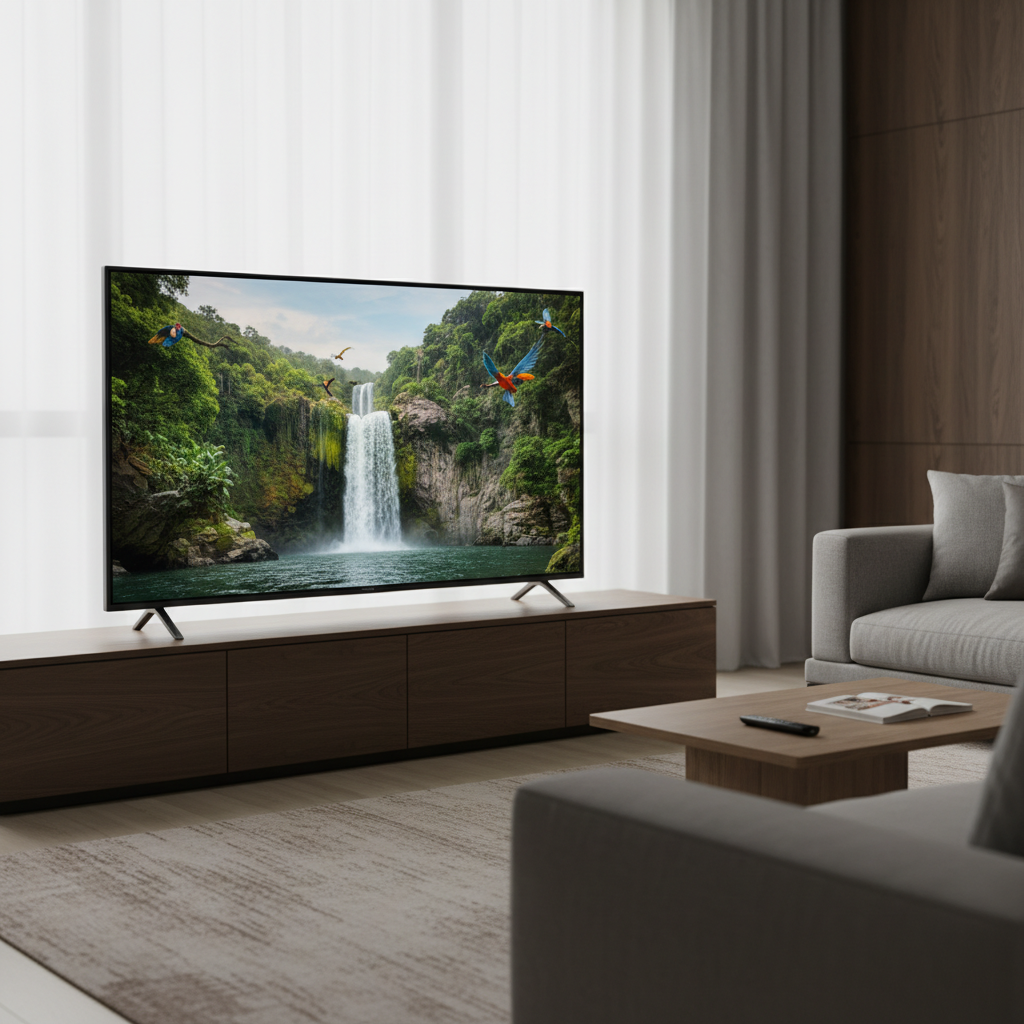
In the rapidly evolving world of home entertainment, the 4K TV stands as a cornerstone, delivering breathtaking visuals and immersive experiences. But what truly elevates the modern viewing experience is the seamless integration of hands-free voice control. Imagine effortlessly switching channels, adjusting volume, or launching your favorite streaming app with just a simple command, all without lifting a finger. This guide delves into the best 4K TVs that offer this unparalleled convenience, ensuring you find a model that perfectly blends cutting-edge technology with intuitive control.
Factors to Consider When Buying a 4K TV with Hands-Free Voice Control
Choosing the ideal 4K TV involves more than just picking the largest screen. A truly smart purchase balances stunning picture quality with features that enhance daily interaction, like hands-free voice control. Understanding the key specifications and technologies will empower you to make an informed decision for your home.
What is 4K Resolution and Why is it Important?
|
Our Picks for the Best 4K TV in 2026
As an Amazon Associate I earn from qualifying purchases.
|
||
| Num | Product | Action |
|---|---|---|
| 1 | TOSHIBA 43" Class C350 Series LED 4K UHD Smart Fire TV, Voice Remote with Alexa, Free & Live TV |

|
| 2 | Samsung 55-Inch Class Crystal UHD U8000F 4K Smart TV (2025 Model) Endless Free Content, Crystal Processor 4K, MetalStream Design, Knox Security, Compatible with Alexa |
|
| 3 | INSIGNIA 43" Class F50 Series LED 4K UHD Smart Fire TV, Voice Remote with Alexa, Stream Live TV Without Cable |
|
| 4 | Samsung 55-Inch Class QLED Q7F Series Samsung Vision AI Smart TV (2025 Model, 55Q7F) Quantum HDR, Object Tracking Sound Lite, Q4 AI Gen1 Processor, 4K upscaling, Gaming Hub, Alexa Built-in |
|
| 5 | Hisense 43" Class A7 Series (43A7NF, 2025 Model) 4K UHD Smart Fire TV, Voice Remote with Alexa, Wide Color Gamut, HDR10+, Dolby Vision, Dolby Atmos, Game Mode, ALLM, Stream Live TV Without Cable |
|
| 6 | Samsung 65-Inch Class QLED Q7F Series Samsung Vision AI Smart TV (2025 Model, 65Q7F) Quantum HDR, Object Tracking Sound Lite, Q4 AI Gen1 Processor, 4K upscaling, Gaming Hub, Alexa Built-in |
|
| 7 | INSIGNIA 50" Class F50 Series LED 4K UHD Smart Fire TV, Voice Remote with Alexa, Stream Live TV Without Cable |
|
| 8 | Roku Smart TV – 55-Inch Select Series, 4K HDR TV – Roku TV with Enhanced Voice Remote – Flat Screen LED Television with Wi-Fi for Streaming Live Local News, Sports, Family Entertainment |
|
| 9 | Samsung 65-Inch Class Crystal UHD U8000F 4K Smart TV (2025 Model) Endless Free Content, Crystal Processor 4K, MetalStream Design, Knox Security, Alexa Built-in |
|
| 10 | TCL 55 Inch Class T7 Series | 4K QLED HDR | 55T7, 2025 Model | 120HZ Refresh Rate High Brightness Smart Google TV Dolby Atmos Audio | Voice Remote Alexa Gaming Streaming Television |
|
4K resolution, also known as Ultra HD (UHD), refers to a display resolution of 3840 x 2160 pixels. This is four times the pixel count of Full HD (1920 x 1080 pixels), meaning a 4K TV packs significantly more detail into every image. The importance lies in the incredible sharpness and clarity it brings, making content appear more lifelike and immersive, especially on larger screens where individual pixels would be noticeable at lower resolutions.
Compared to Full HD or traditional HD, 4K offers a dramatically enhanced viewing experience. Text is crisper, fine details in movies and games are more apparent, and images have greater depth. While much content is still produced in Full HD, 4K TVs excel at upscaling, intelligently enhancing lower-resolution content to near-4K quality, ensuring everything you watch looks its best.
Choosing the Right Screen Size
Selecting the correct screen size is crucial for an optimal viewing experience, directly impacting immersion and comfort. A TV that is too large for a small room can overwhelm the space and lead to discomfort, while a TV too small for a large room might feel underwhelming. The ideal size often depends on your viewing distance and room layout.
To find the perfect fit, measure the distance from your primary viewing spot to where the TV will be placed. Generally, for 4K TVs, you can sit closer without noticing individual pixels, allowing for larger screens in smaller spaces than with lower-resolution TVs. For instance, a 55-inch TV is often suitable for a viewing distance of 5-7 feet, while an 85-inch model might require 9-10 feet or more.
| Viewing Distance | Recommended TV Size (approx.) |
|---|---|
| 4-6 feet | 43-55 inches |
| 6-8 feet | 55-75 inches |
| 8-10+ feet | 75-85+ inches |
A larger screen undeniably enhances the immersive feel, pulling you deeper into movies, sports, and games. However, consider the aesthetic balance with your room and whether the TV will dominate the space.
Display Technology: LED, OLED, QLED, and Mini-LED
The display technology at the heart of your 4K TV largely determines its picture quality, affecting aspects like black levels, color accuracy, and brightness. Each technology comes with its own set of advantages and considerations.
- LED (Light Emitting Diode): These are the most common and generally the most affordable 4K TVs. They use an LED backlight to illuminate liquid crystals. While offering good overall performance, their black levels might not be as deep as OLED or Mini-LED, and contrast can vary.
- OLED (Organic Light Emitting Diode): Renowned for exceptional picture quality, OLED TVs feature pixels that emit their own light, allowing for perfect blacks and infinite contrast. This results in stunning color accuracy and wide viewing angles. They are often considered premium options due to their superior performance, especially for cinematic content and gaming with deep dark scenes. The LG C4 and Samsung S90C OLEDs are excellent examples of this technology.
- QLED (Quantum Dot LED): Developed by Samsung, QLED TVs are an enhancement of traditional LED technology, incorporating quantum dots to boost color volume and brightness. They deliver incredibly vibrant colors and impressive peak brightness, making them great for bright rooms and HDR content. While not achieving OLED’s perfect blacks, high-end QLEDs with full-array local dimming offer excellent contrast. The Samsung Q60C and Haier S800 Series utilize QLED technology.
- Mini-LED: This newer technology refines traditional LED by using thousands of tiny LEDs for backlighting, arranged in many local dimming zones. This allows for much more precise control over brightness and contrast, leading to significantly deeper blacks and higher peak brightness than conventional LED TVs. Mini-LED TVs like the Hisense U8 Series and TCL QM7K offer a compelling balance between OLED’s contrast and QLED’s brightness, often at a more accessible price point than top-tier OLEDs.
High Dynamic Range (HDR) Features
High Dynamic Range (HDR) is a critical feature for modern 4K TVs, dramatically improving picture quality by expanding the range of both contrast and color. It allows for brighter highlights, darker shadows, and a wider, more accurate spectrum of colors, making images appear much more vibrant and true-to-life than standard dynamic range (SDR) content.
There are several HDR formats, with the most common being:
- HDR10: The baseline standard, widely supported across TVs and content.
- Dolby Vision: A premium, dynamic HDR format that optimizes picture quality scene-by-scene or even frame-by-frame, offering superior visual fidelity on compatible content and TVs. Many TVs, like the Sony A95L, support Dolby Vision.
- HLG (Hybrid Log-Gamma): Primarily used for broadcast TV, ensuring compatibility with both HDR and SDR displays.
To fully enjoy HDR, your TV needs to support one or more of these standards, and you’ll need HDR-compatible content (from streaming services like Netflix, Amazon Prime Video, or 4K Blu-ray discs). TVs with high peak brightness (especially Mini-LED and some QLEDs) and excellent local dimming capabilities can truly showcase the benefits of HDR.
Refresh Rate for Smooth Motion
The refresh rate of a TV, measured in Hertz (Hz), indicates how many times the screen updates per second. A higher refresh rate translates to smoother motion, which is particularly beneficial for fast-paced content like sports, action movies, and video games.
- 60Hz: Standard for most basic TVs. It’s sufficient for general viewing, but fast motion might show some blur or judder.
- 120Hz: This is increasingly common in mid-range and high-end 4K TVs. A 120Hz refresh rate provides noticeably smoother motion, making it ideal for gamers and sports enthusiasts. Many premium 4K TVs, like the LG C4 and Samsung S90C, offer 120Hz or even higher.
- 144Hz/165Hz: Found in high-performance gaming TVs, these refresh rates offer an even more fluid experience, especially when connected to a powerful gaming PC or next-gen console that can output such high frame rates. The LG OLED G5 and Samsung S95F boast impressive 165Hz refresh rates.
Many TVs also employ motion interpolation technologies to “smooth” 60Hz content by inserting artificial frames. While this can make motion appear more fluid, it can sometimes introduce a “soap opera effect” that some viewers dislike. For true motion clarity, a native high refresh rate is preferable.
Connectivity Ports and Smart Features
Modern 4K TVs are the hub of your home entertainment system, requiring robust connectivity to integrate with various devices. Key ports and smart features enhance usability and versatility.
- HDMI Ports: Essential for connecting gaming consoles, soundbars, Blu-ray players, and streaming devices. Look for at least three to four HDMI ports. HDMI 2.1 is particularly important for gamers and future-proofing, as it supports 4K resolution at high refresh rates (120Hz or higher), Variable Refresh Rate (VRR), and Auto Low Latency Mode (ALLM).
- USB Ports: Useful for playing media from external drives or powering streaming sticks.
- Optical Audio Output: For connecting older sound systems or soundbars that don’t support HDMI ARC/eARC.
- Ethernet Port: Provides a stable wired internet connection, often preferred for 4K streaming over Wi-Fi.
Smart TV Features: Most 4K TVs are “smart TVs,” running an operating system that provides access to streaming apps (Netflix, YouTube, Disney+, etc.), web browsing, and other functionalities.
- Operating Systems: Common platforms include LG’s webOS, Samsung’s Tizen OS, Google TV (used by Sony, TCL, Hisense, Haier, and others), and Roku TV. Each offers a slightly different interface and app ecosystem.
- App Compatibility: Ensure your favorite streaming services are available on the TV’s platform.
- Integration with Smart Home: Many smart TVs can integrate with other smart home devices, allowing you to control lights or view security camera feeds directly from your TV.
Understanding Hands-Free Voice Control
Hands-free voice control is a game-changer for convenience, allowing you to operate your TV using only your voice, without needing a remote. This feature relies on microphones built directly into the TV or its accompanying soundbar, constantly listening for a wake word (like “Hey Google” or “Alexa”).
Once activated, you can issue commands such as:
- “Turn on the TV.”
- “Change to HDMI 2.”
- “Open Netflix.”
- “Play ‘The Crown’.”
- “Increase the volume to 25.”
- “What’s the weather like?”
Popular voice assistants integrated into 4K TVs include Google Assistant (common on Sony, TCL, Hisense, Haier TVs) and Amazon Alexa (often found on Samsung, LG, and some TCL models). Some TVs, like those from LG with webOS, also have their own proprietary voice control systems.
“Hands-free voice control transforms how we interact with our entertainment, offering unprecedented accessibility and convenience. It’s a key feature for anyone seeking a truly modern and integrated smart home experience.” – Dr. Alex Chen, Smart Home Technology Expert
When considering a TV with hands-free voice control, check for:
- Responsiveness: How quickly and accurately the TV responds to commands.
- Microphone Range: Ensure it can pick up your voice from your typical viewing distance (often 6-10 feet).
- Privacy Features: Some TVs offer a physical switch to disable the microphone when not in use, providing peace of mind regarding privacy.
Comparing Popular 4K TVs with Hands-Free Voice Control
The market for 4K TVs with hands-free voice control is vibrant, with many excellent options from leading manufacturers. Here’s a comparison of some popular models that excel in this area, offering a blend of picture quality, features, and smart control.
| Feature / Model | LG OLED G5 (2025) | Samsung S95F (2025) | Hisense U8N (2024) | Sony A95L (2023) | TCL QM7K (2025) | Haier S800 Series (2025) |
|---|---|---|---|---|---|---|
| Display Tech | OLED | QD-OLED | Mini-LED ULED | QD-OLED | QD-Mini LED | QLED |
| Resolution | 4K UHD | 4K UHD | 4K UHD | 4K UHD | 4K UHD | 4K UHD |
| Hands-Free VC | Yes (LG AI Service) | Yes (Samsung Voice/Alexa) | Yes (Google TV) | Yes (Google TV) | Yes (Google TV) | Yes (Google TV) |
| Refresh Rate | 165Hz | 165Hz | 144Hz | 100/120Hz | 144Hz | 60Hz (typical for budget) |
| HDR Support | Dolby Vision | HDR10, HDR10+ | Dolby Vision | Dolby Vision IQ, HDR10, HLG | Dolby Vision | Dolby Vision |
| Gaming Features | VRR, Low Input Lag | VRR | HDMI 2.1, VRR, ALLM | Perfect for PlayStation | VRR, G-Sync, FreeSync | – |
| Key Differentiator | Top-tier gaming, wide angles | Vibrant QD-OLED colors | Excellent value, high brightness | Superior picture & sound, PS5 optimization | Strong gaming performance, budget-friendly | Cinematic immersion, vibrant colors |
Note: Model years and specifications can vary slightly by region and may be updated frequently.
Tips for Choosing the Best 4K TV for Your Needs
Navigating the multitude of options can be daunting, but a structured approach can simplify the process of selecting your ideal 4K TV with hands-free voice control.
Determine Your Usage Needs
Before diving into specifications, consider how you intend to use your new TV.
- For Movie Buffs: Prioritize OLED or QD-OLED TVs for the deepest blacks and best contrast, paired with Dolby Vision HDR support for cinematic quality.
- For Gamers: Look for high refresh rates (120Hz, 144Hz, or 165Hz), HDMI 2.1 ports, Variable Refresh Rate (VRR), and Auto Low Latency Mode (ALLM). Low input lag is also critical.
- For Sports Fans: A higher refresh rate (120Hz+) is key for smooth motion. Mini-LED or QLED TVs with high brightness can perform well in brightly lit rooms.
- For General Entertainment/Family Viewing: A balanced TV with good brightness, decent viewing angles, and intuitive smart features (like Google TV or webOS with hands-free control) will suffice.
Also, consider who will be using the TV. For individuals with mobility impairments, hands-free voice control is not just a convenience but an essential accessibility feature, empowering independent entertainment. Finally, define your budget. While premium OLEDs offer the best performance, excellent Mini-LED and QLED options provide great value across various price points.
Research and Compare Models
Once you have a clear idea of your needs and budget, it’s time to research.
- Read Expert Reviews: Consult reputable tech websites and publications for in-depth analyses, performance tests, and expert opinions. These often highlight the nuances of picture quality, smart features, and voice control effectiveness.
- User Reviews: Check platforms like Amazon or Best Buy for real-world user feedback. Pay attention to comments regarding the responsiveness of voice control, ease of setup, and overall satisfaction.
- Compare Specifications: Use the gathered information to compare key specs like display technology, refresh rate, HDR support, number and type of HDMI ports, and the integrated voice assistant (Google Assistant, Alexa, etc.).
Don’t be afraid to create a shortlist of 2-3 models that seem to meet your criteria. This makes the next step much more manageable.
Testing Before Purchase
Whenever possible, experience the TV firsthand before making a final decision.
- Visit a Retail Store: This allows you to see the picture quality in person, compare different display technologies side-by-side, and assess viewing angles.
- Test Voice Control: Ask a sales associate to demonstrate the hands-free voice control. Pay attention to how well it understands your commands, its range, and overall responsiveness.
- Inspect the Unit: If purchasing in-store, check for any physical damage like scratches or dents. Ensure all ports are in working order. Ask the staff to demonstrate the TV’s key features, including its smart interface and hands-free capabilities.
This hands-on approach can confirm your research and ensure you are fully satisfied with your choice.
4K TV Buying Guide: Making the Smart Choice
Choosing the best 4K TV with hands-free voice control requires careful consideration of several interconnected factors. Start by understanding the core technologies: 4K resolution is standard, but the display panel (OLED, QD-OLED, Mini-LED, QLED) will dictate picture quality, with OLED offering superior blacks and QD-OLED vibrant colors, while Mini-LED balances brightness and contrast effectively. Prioritize a screen size appropriate for your viewing distance.
For an enhanced visual experience, look for robust HDR support, particularly Dolby Vision, and a high refresh rate (120Hz+) for smooth motion, especially if you’re a gamer. Connectivity is key, so ensure ample HDMI 2.1 ports. Finally, evaluate the hands-free voice control integration – checking for Google Assistant or Alexa compatibility, responsiveness, and privacy options. Brands like LG, Samsung, Sony, TCL, and Hisense offer excellent options across various price points. For example, the LG OLED G5 or Sony A95L represents the pinnacle of premium performance, while the Hisense U8N or TCL QM7K provides exceptional value with strong features.
By aligning these technical aspects with your personal viewing habits and budget, you can confidently select a 4K TV that not only delivers stunning visuals but also provides the ultimate convenience of hands-free control.
Conclusion
The journey to finding the perfect 4K TV with hands-free voice control is an exciting one, opening up a world of convenience and stunning visuals. We’ve explored the crucial role of 4K resolution, the distinct characteristics of display technologies like OLED and QLED, and the importance of features such as HDR and high refresh rates. Hands-free voice control, powered by assistants like Google and Alexa, truly transforms the living room experience, making your TV more intuitive and accessible than ever before.
By carefully considering your viewing habits, screen size preferences, and budget, you can navigate the options from top brands like LG, Samsung, Sony, and Hisense to find a TV that not only meets but exceeds your expectations. With the right 4K TV, you’re not just upgrading a screen; you’re enhancing your entire home entertainment ecosystem for years to come. What will you watch first with your new, effortlessly controlled 4K TV?
Frequently Asked Questions
Which 4K TV brands offer the best hands-free voice control?
Leading brands such as LG, Samsung, and Sony consistently offer excellent hands-free voice control integration, often leveraging Google Assistant, Amazon Alexa, or their proprietary AI services like LG’s webOS AI and Samsung’s Bixby/Voice. TCL and Hisense, using Google TV, also provide very capable hands-free experiences.
Is hands-free voice control truly convenient, or just a gimmick?
Hands-free voice control is a significant convenience, allowing users to power on/off, change channels, adjust volume, launch apps, and search for content without a remote. It’s particularly beneficial for accessibility, multitasking, or when the remote is out of reach, making it far from a gimmick for many users.
Do all 4K smart TVs have hands-free voice control?
No, not all 4K smart TVs offer hands-free voice control. While most smart TVs have voice control via a button on their remote, truly hands-free operation (where the TV’s built-in microphones listen for a wake word) is typically found on mid-range to high-end models. Always check the specifications before purchasing.
What are the privacy concerns with hands-free voice control on a 4K TV?
Privacy is a valid concern with always-listening microphones. Reputable brands include features like a physical mic-off switch or clear indicators when the microphone is active. Users can also disable the voice assistant feature in settings if they prefer, ensuring control over their privacy.
Can I use different voice assistants with my 4K TV?
Many 4K TVs offer compatibility with multiple voice assistants, such as both Google Assistant and Amazon Alexa. Some may have one built-in for hands-free operation and offer compatibility with others via smart speakers or specific remote buttons. Check the TV’s specifications for supported voice services.