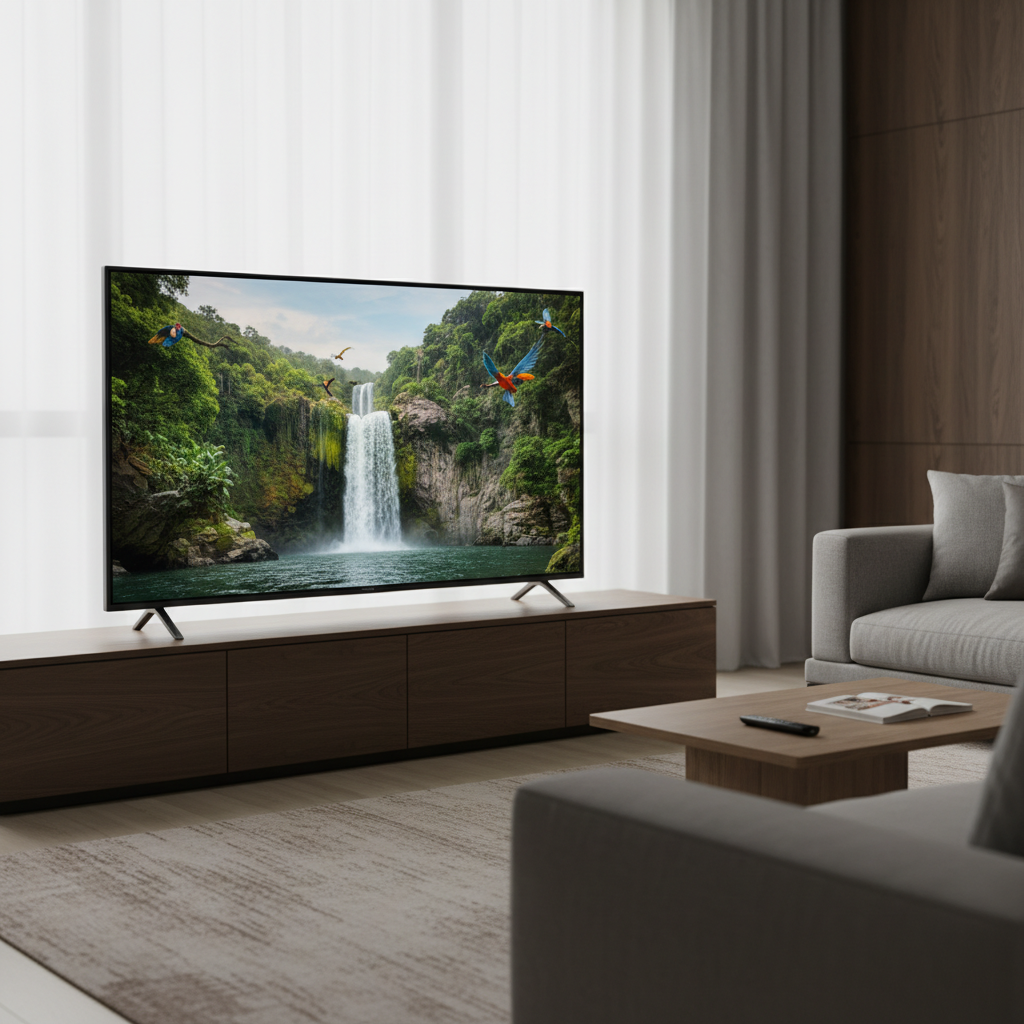
Choosing a new 4K TV can feel like navigating a maze of acronyms and specifications, especially when two industry titans, Samsung and LG, consistently push the boundaries of home entertainment. For 2026, the competition is fiercer than ever, with both brands introducing groundbreaking advancements that promise to redefine your viewing experience. Whether you prioritize cinematic immersion, vibrant colors for bright rooms, or cutting-edge gaming features, understanding the nuances between Samsung and LG’s latest 4K TV offerings is crucial. This comprehensive guide will dissect their technologies, compare their strengths, and help you determine which brand ultimately wins the battle for your living room this year.
Understanding 4K TV Technology: The Foundation of Excellence
At the heart of every premium television experience lies the display technology, and 4K resolution is the undisputed standard for clarity and detail. A 4K TV, also known as Ultra HD, boasts a resolution of 3840 x 2160 pixels, which is four times the pixel count of a Full HD (1920 x 1080) television. This dramatically increased pixel density translates into an image that is incredibly sharp and detailed, making every scene feel more lifelike and immersive.
The jump from Full HD to 4K means you can sit closer to your screen without perceiving individual pixels, drawing you deeper into the content. This higher resolution is particularly beneficial on larger screen sizes, where the difference in clarity is most apparent. From intricate textures in a documentary to the fine details in a blockbuster movie, 4K resolution ensures that you don’t miss a single visual element, elevating the overall picture quality significantly.
Display Technologies: OLED vs. QD-OLED vs. Mini-LED
The choice between Samsung and LG often boils down to their core display technologies, each offering distinct advantages. LG has long been synonymous with traditional OLED (Organic Light Emitting Diode), while Samsung has innovated with QD-OLED (Quantum Dot Organic Light Emitting Diode) and its advanced Mini-LED QLED panels.
LG’s OLED panels, primarily based on White OLED (WOLED) technology, are renowned for their ability to produce perfect blacks and infinite contrast. Each pixel emits its own light, meaning when a pixel is off, it’s truly black, leading to an astonishing depth of image. For 2026, LG’s C6 series, especially the premium C6H model, incorporates a Primary RGB Tandem 2.0 OLED panel in larger sizes, promising richer brightness and color thanks to its upgraded Alpha 11 Gen 3 processor. This technology makes LG OLEDs a favorite among cinephiles seeking an authentic, film-like viewing experience in darker environments.
Samsung, on the other hand, fields a dual-pronged attack. Its QD-OLED panels, found in high-end models like the S90H and S95H, combine the perfect blacks of OLED with the vibrant colors and higher brightness of Quantum Dot technology. This results in a display that offers superior color volume and maintains color accuracy even at peak brightness levels. Furthermore, Samsung continues to refine its Mini-LED QLED technology, which utilizes thousands of tiny LEDs for backlighting, offering incredibly high brightness and precise local dimming zones for excellent contrast, though not reaching OLED’s absolute black levels. A notable advancement for 2026 is the inclusion of Samsung’s Glare Free anti-reflection screen, previously a flagship-exclusive feature, now trickling down to mid-range OLEDs like the S90H, making them far more versatile in bright living rooms.
Picture Processing and AI: The Brains Behind the Beauty
Modern 4K TVs aren’t just about raw panel technology; they also rely heavily on sophisticated picture processing and artificial intelligence (AI) to optimize content. Both Samsung and LG invest heavily in their proprietary processors to enhance everything from upscaling to color accuracy.
Samsung, in 2026, is pushing harder with smarter AI processing and improved HDR tone mapping. Its Vision AI Suite offers advanced content recognition, intelligent upscaling to bring lower-resolution content closer to 4K quality, and various accessibility features. This intelligent processing works to dynamically adjust picture settings in real-time, ensuring optimal clarity and vibrancy regardless of the source material.
LG counters with its upgraded Alpha 11 Gen 3 processor, featured in the C6 series and flagship G6. This processor brings faster performance, enhanced AI upscaling, and improved SDR to HDR conversion, giving standard definition content a high dynamic range boost. Furthermore, LG’s webOS 26 integrates powerful AI capabilities like Google Gemini and Microsoft Copilot, enabling more intuitive voice control and smart features. Both brands also offer robust smart home integration, allowing their TVs to serve as central hubs for your connected ecosystem.
HDR Standards: Dolby Vision vs. HDR10+
High Dynamic Range (HDR) is crucial for delivering more lifelike images with greater contrast, brighter highlights, and a wider range of colors. However, the ecosystem is split between two primary dynamic HDR formats: Dolby Vision and HDR10+.
LG TVs consistently support Dolby Vision, which uses dynamic metadata to optimize HDR performance scene-by-scene or even frame-by-frame. This allows for a more precise and nuanced HDR experience, as the TV can adjust brightness and contrast specifically for each moment of content. Dolby Vision is widely adopted across streaming services and disc formats, making LG a strong choice for those who prioritize this standard.
Samsung, conversely, supports HDR10+, an open-source dynamic HDR standard, but continues to omit Dolby Vision support from its televisions in 2026. Instead, Samsung relies on its advanced HDR10+ implementation and superior HDR tone mapping through its AI processing to deliver a compelling high dynamic range picture. While HDR10+ also uses dynamic metadata, the absence of Dolby Vision can be a deciding factor for some consumers with extensive Dolby Vision-encoded content libraries.
Gaming Performance: Speed and Responsiveness
For gamers, a TV’s responsiveness, refresh rate, and support for next-gen console features are paramount. Both Samsung and LG have made significant strides in optimizing their 4K TVs for gaming in 2026.
Samsung’s 2026 lineup boasts future-ready gaming features and generally performs exceptionally well in gaming scenarios. Its QD-OLED models, in particular, often deliver brighter images in gaming mode and offer a well-rounded gaming experience with low input lag and support for Variable Refresh Rate (VRR) and Auto Low Latency Mode (ALLM) via HDMI 2.1 ports.
LG remains a formidable competitor in the gaming arena. Its OLED TVs are known for their near-instantaneous pixel response times, virtually eliminating motion blur. The flagship LG G6, for instance, offers impressive 165Hz support, pushing the boundaries for competitive gaming. With powerful processors and comprehensive HDMI 2.1 connectivity, LG OLEDs continue to be a top choice for console and PC gamers demanding the highest levels of performance and fluidity.
Smart TV Platforms: Tizen vs. webOS
The “smart” in Smart TV refers to the operating system that governs user interaction, app access, and connectivity. Both Samsung and LG have highly developed, intuitive platforms.
Samsung’s Tizen OS is known for its mature and polished interface. It offers a clean, user-friendly experience with quick access to a vast array of streaming apps, live TV, and smart home controls. Tizen is highly customizable, allowing users to arrange their favorite apps and sources for a personalized home screen. Its robust smart home integration means your Samsung TV can seamlessly connect with other SmartThings-enabled devices.
LG’s webOS 26, for its part, is praised for its speed and smoothness. The updated interface promises even faster navigation and a fluid user experience. With integrated AI assistants like Google Gemini and Microsoft Copilot, webOS offers advanced voice control and intelligent recommendations. Like Tizen, webOS provides comprehensive access to streaming services and strong smart home capabilities, supporting standards like Matter, Thread, and AirPlay.
Design and Aesthetics: Form Meets Function
Beyond internal technology, the aesthetic appeal and physical design of a 4K TV play a significant role in its integration into your home. Both Samsung and LG offer sleek, modern designs that aim to enhance any living space.
Samsung’s premium models, such as the S95H, showcase innovative designs, including a sophisticated “Frame” aesthetic and the convenience of a Wireless One Connect box. This external box houses all inputs, allowing for a single, thin cable to run to the display, resulting in a cleaner, minimalist setup ideal for wall-mounting. The Glare Free screens also contribute to a more seamless viewing experience by minimizing environmental reflections.
LG’s 2026 lineup, including the C6 and G6 series, continues its tradition of elegant, minimalist designs with slim bezels and thin profiles. While the C6H model with its new panel is available only in larger sizes, LG offers a wider range of dimensions for its standard C6, catering to various room sizes and preferences. Both brands emphasize a premium build quality that complements their advanced display technologies.
Mid-Range Standouts for 2026: LG C6 vs. Samsung S90H
The mid-range OLED market is where the battle between Samsung and LG often gets most intense, as these models offer flagship-level features without the ultra-premium price tag. For 2026, the LG C6 and Samsung S90H are the models to watch.
The LG C6, particularly the C6H variant with its Primary RGB Tandem 2.0 OLED panel, is positioned as an exceptional choice for cinematic enthusiasts. It delivers rich OLED contrast, deep blacks, and excellent processing, making it ideal for a dedicated home theater setup, especially in its larger 77-inch and 83-inch sizes. The upgraded Alpha 11 Gen 3 processor further enhances its picture quality and overall performance.
Samsung’s S90H OLED emerges as a highly versatile everyday TV, particularly for environments with ambient light. Its standout feature is the inclusion of the OLED Glare Free anti-reflection screen, a technology previously exclusive to Samsung’s top-tier models. This innovation makes the S90H significantly more usable in bright living rooms by virtually eliminating distracting reflections. Coupled with a wide range of available sizes and Samsung’s latest picture processing, the S90H provides a compelling package for general viewing, sports, and gaming throughout the day.
“The inclusion of Glare Free technology in Samsung’s mid-range OLEDs like the S90H is a game-changer for casual viewers and those with bright living rooms.” – James Davidson, TV Hardware Staff Writer, TechRadar
Conclusion
In 2026, both Samsung and LG continue to push the boundaries of 4K TV technology, each excelling in different aspects. LG, with its refined OLED technology and the powerful Alpha 11 Gen 3 processor, remains the preferred choice for dark-room cinematic viewing, offering unparalleled black levels and support for Dolby Vision. Samsung, with its brilliant QD-OLED panels, superior bright-room performance thanks to Glare Free technology, and robust gaming features, offers a more versatile and often more vibrant viewing experience.
Ultimately, the “winner” in the Samsung vs. LG debate for 2026 depends entirely on your specific needs, viewing habits, and environment. Do you prioritize the absolute contrast and Dolby Vision of LG for movie nights, or the bright, reflection-free vibrancy and dynamic gaming of Samsung? Consider your typical room lighting, your primary content sources, and your budget.
Which brand will you choose to elevate your home entertainment experience this year?
Frequently Asked Questions
Which brand is better for gaming in 2026, Samsung or LG?
|
Our Picks for the Best 4K TV in 2026
As an Amazon Associate I earn from qualifying purchases.
|
||
| Num | Product | Action |
|---|---|---|
| 1 | Samsung 65-Inch Class QLED Q7F Series Samsung Vision AI Smart TV (2025 Model, 65Q7F) Quantum HDR, Object Tracking Sound Lite, Q4 AI Gen1 Processor, 4K upscaling, Gaming Hub, Alexa Built-in |

|
| 2 | Hisense 43" Class A7 Series (43A7NF, 2025 Model) 4K UHD Smart Fire TV, Voice Remote with Alexa, Wide Color Gamut, HDR10+, Dolby Vision, Dolby Atmos, Game Mode, ALLM, Stream Live TV Without Cable |
|
| 3 | TOSHIBA 43" Class C350 Series LED 4K UHD Smart Fire TV, Voice Remote with Alexa, Free & Live TV |
|
| 4 | Samsung 55-Inch Class Crystal UHD U8000F 4K Smart TV (2025 Model) Endless Free Content, Crystal Processor 4K, MetalStream Design, Knox Security, Compatible with Alexa |
|
| 5 | Samsung 65-Inch Class Crystal UHD U8000F 4K Smart TV (2025 Model) Endless Free Content, Crystal Processor 4K, MetalStream Design, Knox Security, Alexa Built-in |
|
| 6 | TCL 55 Inch Class T7 Series | 4K QLED HDR | 55T7, 2025 Model | 120HZ Refresh Rate High Brightness Smart Google TV Dolby Atmos Audio | Voice Remote Alexa Gaming Streaming Television |
|
| 7 | INSIGNIA 43" Class F50 Series LED 4K UHD Smart Fire TV, Voice Remote with Alexa, Stream Live TV Without Cable |
|
| 8 | INSIGNIA 50" Class F50 Series LED 4K UHD Smart Fire TV, Voice Remote with Alexa, Stream Live TV Without Cable |
|
| 9 | Roku Smart TV – 55-Inch Select Series, 4K HDR TV – Roku TV with Enhanced Voice Remote – Flat Screen LED Television with Wi-Fi for Streaming Live Local News, Sports, Family Entertainment |
|
| 10 | Samsung 55-Inch Class QLED Q7F Series Samsung Vision AI Smart TV (2025 Model, 55Q7F) Quantum HDR, Object Tracking Sound Lite, Q4 AI Gen1 Processor, 4K upscaling, Gaming Hub, Alexa Built-in |
|
Both brands offer excellent gaming performance. Samsung provides future-ready gaming features and often performs brighter in gaming mode, while LG offers near-instantaneous response times and high refresh rates, with models like the G6 supporting 165Hz. Your choice may depend on specific model features and personal preference for display characteristics.
Do Samsung or LG TVs handle reflections better?
For 2026, Samsung has a notable advantage with its Glare Free anti-reflection screen technology, which is now available on mid-range OLED models like the S90H. This significantly reduces mirror-like reflections, making Samsung TVs generally better for viewing in brighter rooms. LG’s standard OLEDs, while excellent in dark rooms, can still be more susceptible to reflections.
Which 2026 LG OLED TV is best for movies?
The LG C6H, with its Primary RGB Tandem 2.0 OLED panel and upgraded Alpha 11 Gen 3 processor, is an outstanding choice for movie lovers, offering richer brightness, color, and exceptional processing for cinematic immersion, especially in larger sizes. The standard LG C6 also provides excellent performance for dark-room viewing.
What is the main difference between LG’s OLED and Samsung’s QD-OLED?
LG’s traditional OLED (WOLED) uses white sub-pixels alongside color filters to produce light, excelling in perfect blacks. Samsung’s QD-OLED combines blue OLED emitters with quantum dots to create a full spectrum of colors, resulting in higher color brightness and volume, particularly at peak luminance, while still maintaining OLED’s perfect black levels.
Does Samsung support Dolby Vision in 2026?
No, Samsung TVs in 2026, as in previous years, do not support the Dolby Vision HDR format. Instead, Samsung utilizes HDR10+ and its proprietary HDR tone mapping algorithms to deliver high dynamic range content. LG TVs, however, do support Dolby Vision.