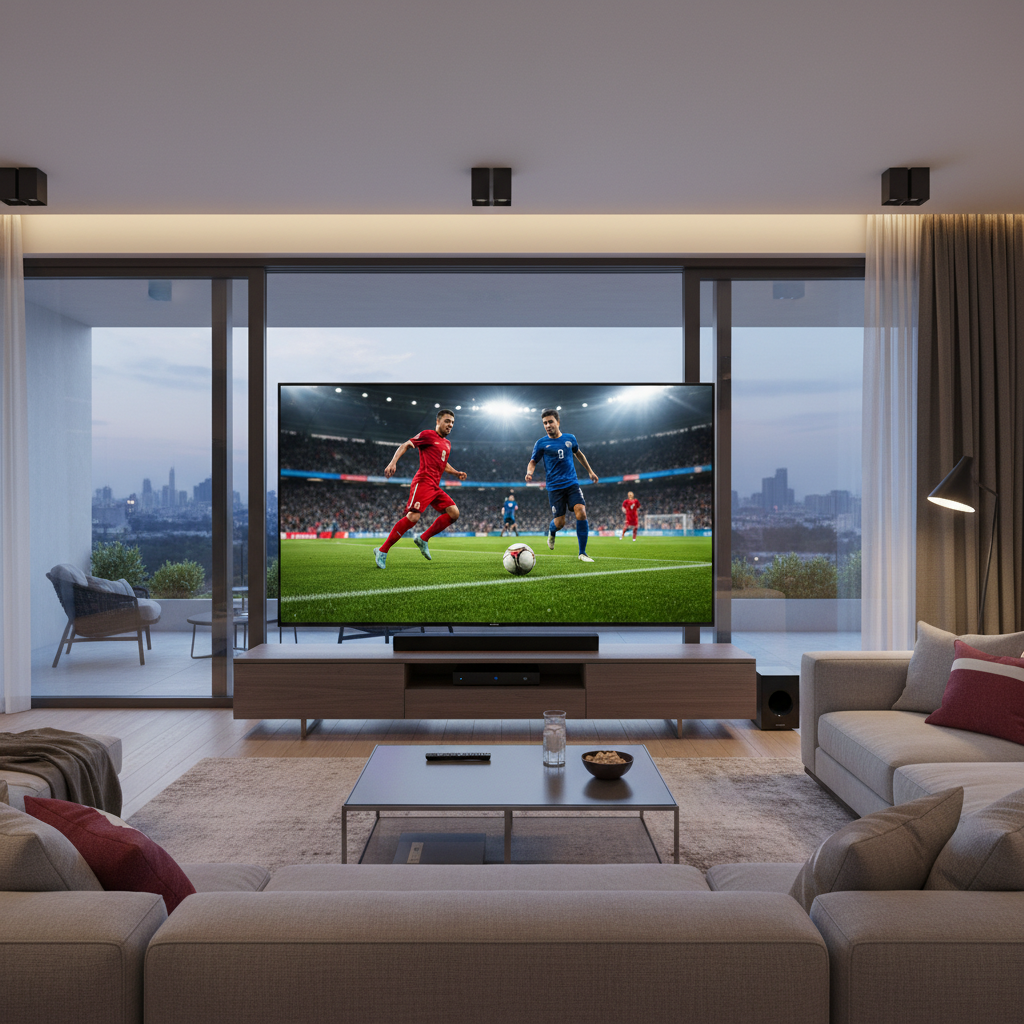
Stepping into the world of 4K TVs in 2026 can feel overwhelming. With countless models promising unparalleled visual experiences, how do you sift through the jargon and find the display that truly elevates your home entertainment? As a technician with over a decade of experience evaluating hundreds of TVs, I understand the nuances of panel technologies, image processors, and audio innovations. This comprehensive guide cuts through the noise, providing expert insights and top-rated picks to help you confidently select the best 4K TV for your needs and budget.
Essential Factors to Consider When Buying a 4K TV
What is 4K Resolution and Why Does It Matter?
|
Our Picks for the Best 4K TV in 2026
As an Amazon Associate I earn from qualifying purchases.
|
||
| Num | Product | Action |
|---|---|---|
| 1 | TOSHIBA 43" Class C350 Series LED 4K UHD Smart Fire TV, Voice Remote with Alexa, Free & Live TV |

|
| 2 | TCL 55 Inch Class T7 Series | 4K QLED HDR | 55T7, 2025 Model | 120HZ Refresh Rate High Brightness Smart Google TV Dolby Atmos Audio | Voice Remote Alexa Gaming Streaming Television |
|
| 3 | Samsung 55-Inch Class QLED Q7F Series Samsung Vision AI Smart TV (2025 Model, 55Q7F) Quantum HDR, Object Tracking Sound Lite, Q4 AI Gen1 Processor, 4K upscaling, Gaming Hub, Alexa Built-in |
|
| 4 | Roku Smart TV – 55-Inch Select Series, 4K HDR TV – Roku TV with Enhanced Voice Remote – Flat Screen LED Television with Wi-Fi for Streaming Live Local News, Sports, Family Entertainment |
|
| 5 | Samsung 55-Inch Class Crystal UHD U8000F 4K Smart TV (2025 Model) Endless Free Content, Crystal Processor 4K, MetalStream Design, Knox Security, Compatible with Alexa |
|
| 6 | INSIGNIA 50" Class F50 Series LED 4K UHD Smart Fire TV, Voice Remote with Alexa, Stream Live TV Without Cable |
|
| 7 | Hisense 43" Class A7 Series (43A7NF, 2025 Model) 4K UHD Smart Fire TV, Voice Remote with Alexa, Wide Color Gamut, HDR10+, Dolby Vision, Dolby Atmos, Game Mode, ALLM, Stream Live TV Without Cable |
|
| 8 | Samsung 65-Inch Class QLED Q7F Series Samsung Vision AI Smart TV (2025 Model, 65Q7F) Quantum HDR, Object Tracking Sound Lite, Q4 AI Gen1 Processor, 4K upscaling, Gaming Hub, Alexa Built-in |
|
| 9 | Samsung 65-Inch Class Crystal UHD U8000F 4K Smart TV (2025 Model) Endless Free Content, Crystal Processor 4K, MetalStream Design, Knox Security, Alexa Built-in |
|
| 10 | INSIGNIA 43" Class F50 Series LED 4K UHD Smart Fire TV, Voice Remote with Alexa, Stream Live TV Without Cable |
|
4K resolution, also known as Ultra High Definition (UHD), refers to a display resolution of 3840 x 2160 pixels. This is four times the pixel count of Full HD (1920 x 1080), meaning a 4K TV packs significantly more detail into every image. The importance of 4K lies in its ability to deliver incredibly sharp and lifelike visuals, making content appear more immersive and realistic, especially on larger screens. While Full HD was once the standard, 4K has become the benchmark for premium viewing, offering superior clarity and finer details that truly bring content to life.
Choosing the Right Screen Size
Selecting the appropriate screen size is crucial for an optimal viewing experience, as it directly impacts immersion and comfort. The ideal TV size largely depends on your room dimensions and your typical viewing distance. Sitting too close to a large TV can make individual pixels noticeable, while sitting too far from a smaller screen can diminish the impact of 4K detail. For a balanced experience, a general rule of thumb is to have a viewing distance of approximately 1.5 to 2.5 times the screen size (measured diagonally).
Here’s a recommended guide for screen size based on viewing distance:
| Viewing Distance | Recommended Screen Size |
|---|---|
| 5-7 feet (1.5-2.1m) | 43-55 inches |
| 7-9 feet (2.1-2.7m) | 55-65 inches |
| 9-12 feet (2.7-3.7m) | 65-75 inches |
| 12+ feet (3.7m+) | 75 inches or larger |
A larger screen often enhances the immersive quality of 4K content, making movies feel more cinematic and games more engaging, provided it fits your space comfortably.
Display Technologies: LED, OLED, and QLED
The panel technology is the heart of any 4K TV, dictating its picture quality, brightness, and color reproduction. Understanding the differences between LED, OLED, and QLED (including Mini-LED) is key to making an informed decision.
- LED (Light Emitting Diode): These are the most common and generally the most affordable TVs. They use a backlight to illuminate pixels. While offering good overall performance, their contrast and black levels can be limited compared to other technologies.
- OLED (Organic Light Emitting Diode): Celebrated for their exceptional picture quality, OLED TVs feature self-illuminating pixels that can turn on and off individually. This results in perfect blacks, infinite contrast ratios, and incredibly wide viewing angles. Popular OLED models in 2026 include the LG C5 OLED and Samsung S95F OLED, praised for their vivid colors and detailed textures. OLED TVs are ideal for dark room viewing, offering unparalleled depth and realism.
- QLED (Quantum Dot LED): Primarily championed by Samsung and Hisense, QLED TVs are an enhancement of LED technology. They use a layer of quantum dots to produce brighter and more vibrant colors than standard LEDs. When combined with Mini-LED backlighting, QLED TVs, such as the Samsung QN90F Neo QLED and Hisense U8 Series, achieve significantly higher brightness, better contrast, and more precise local dimming, rivaling OLEDs in many aspects, especially in bright rooms.
Each technology offers distinct advantages, so your choice will depend on your priorities, viewing environment, and budget.
High Dynamic Range (HDR) Features
High Dynamic Range (HDR) is a critical feature that dramatically improves picture quality beyond just resolution. HDR expands the range of both contrast and color, delivering brighter whites, deeper blacks, and a wider, more accurate spectrum of colors. This results in images that are closer to what the human eye perceives in the real world.
Several HDR formats exist, with the most common being:
- HDR10: The baseline standard for HDR content, widely supported across TVs and streaming platforms.
- Dolby Vision: A premium HDR format that uses dynamic metadata to optimize picture quality scene-by-scene or even frame-by-frame, offering a more refined and consistent HDR experience. Many LG OLEDs and some Hisense and TCL models support Dolby Vision.
- HDR10+: Samsung’s alternative to Dolby Vision, also using dynamic metadata to enhance picture quality. Found on Samsung TVs and increasingly on others.
- HLG (Hybrid Log-Gamma): Primarily used for broadcast TV, providing a backward-compatible HDR signal.
To fully leverage HDR, ensure your TV supports the formats used by your preferred content sources. The Samsung S95F OLED, for example, excels at showcasing vivid colors and details in HDR content, despite its lack of Dolby Vision, thanks to its brightness and HDR10+ support.
Refresh Rate
The refresh rate, measured in Hertz (Hz), indicates how many times per second the TV’s screen refreshes its image. A higher refresh rate generally results in smoother motion, which is particularly beneficial for fast-paced content.
- 60Hz: Standard for most casual viewing and general TV consumption. It’s perfectly adequate for movies, TV shows, and most streaming content. However, for intense gaming or sports, motion can appear less fluid. The Hisense U6 Series, for example, has a 60Hz refresh rate which is suitable for casual games but may not be ideal for demanding titles.
- 120Hz, 144Hz, and 165Hz: These higher refresh rates are crucial for gamers, offering significantly smoother gameplay and reduced motion blur. Many modern 4K TVs, especially those geared towards gaming like the LG OLED Evo G5 and Samsung S95F OLED, now feature native 120Hz, 144Hz, or even 165Hz panels. These TVs often include Variable Refresh Rate (VRR) technology (such as FreeSync or G-Sync compatibility), which synchronizes the TV’s refresh rate with the output of a gaming console or PC, eliminating screen tearing and stuttering for an incredibly fluid gaming experience.
Connectivity and Smart Features
A modern 4K TV is much more than just a display; it’s the central hub of your home entertainment system. Therefore, robust connectivity and smart features are essential.
- HDMI 2.1 Ports: These are vital for supporting the latest generation of gaming consoles and PCs. HDMI 2.1 enables 4K resolution at 120Hz (or even higher, like 144Hz/165Hz), VRR, and Auto Low Latency Mode (ALLM), ensuring the best possible gaming and high-bandwidth content experience. Many top-rated TVs, such as the Samsung S95F OLED, come equipped with multiple HDMI 2.1 ports.
- USB Ports: Useful for connecting external drives for media playback or powering accessories.
- Wireless Connectivity: Wi-Fi (preferably Wi-Fi 6) and Bluetooth are standard for streaming content, connecting smart home devices, and using wireless headphones.
- Smart TV Platforms: The operating system defines your TV’s user experience. Popular platforms include:
- Google TV: Known for its user-friendly interface and extensive app library (e.g., Hisense U6 Series).
- Samsung Tizen: Samsung’s proprietary OS, offering a wide range of apps and smart home integration, though some users find its interface cluttered.
- LG webOS: Praised for its intuitive “Magic Remote” and clean interface.
- Roku TV/Fire TV: Simple, easy-to-navigate platforms integrated into TVs from various brands.
Consider the number and type of ports you’ll need, as well as the smart platform that best suits your streaming habits and ecosystem.
Top 10 Best 4K TVs of 2026: A Detailed Comparison
Here’s a detailed look at some of the best 4K TVs available in 2026, offering a blend of performance, value, and specialized features.
| Model | Display Type | Sizes Available | Key HDR Support | Native Refresh Rate | Notable Features | Best For |
|---|---|---|---|---|---|---|
| Samsung QN90F Neo QLED | Mini-LED QLED | 55″, 65″, 75″, 85″ | HDR10+, HDR10, HLG | 120Hz | Exceptional brightness, anti-glare, Pantone validated colors | Bright rooms, overall premium viewing |
| Samsung S95F OLED | QD-OLED | 55″, 65″, 77″, 83″ | HDR10+, HDR10, HLG | 165Hz (PC/VRR), 120Hz | Perfect blacks, vivid colors, anti-glare coating, 4x HDMI 2.1 | Gaming, dark room viewing, wide viewing angles |
| LG C5 OLED | OLED | 42″, 48″, 55″, 65″, 77″, 83″ | Dolby Vision, HDR10, HLG | 120Hz (up to 144Hz) | Excellent all-rounder, great for movies and gaming, 4x HDMI 2.1 | All-purpose, home theater, gaming |
| Hisense U8QG Mini-LED | Mini-LED QLED | 65″, 75″, 85″, 98″ | Dolby Vision IQ, HDR10+ | 120Hz | Incredible brightness, color saturation, Google TV OS | Value, bright rooms, all-purpose |
| LG OLED Evo G5 | OLED | 55″, 65″, 77″, 83″, 97″ | Dolby Vision, HDR10, HLG | 165Hz | Near-instant response time, gallery design, ideal for wall-mounting | Premium gaming, high-end home theater |
| Sony Bravia 9 | Mini-LED | 65″, 75″, 85″ | Dolby Vision, HDR10, HLG | 120Hz | Phenomenal performance, advanced image processing, excellent audio | Cinephiles, demanding users |
| TCL QM8K Mini-LED | Mini-LED QLED | 65″, 75″, 85″, 98″ | Dolby Vision, HDR10+ | 144Hz | Best Mini-LED for its price, high brightness, effective local dimming | Value, bright rooms, gaming |
| Roku Pro Series | QLED | 55″, 65″, 75″ | Dolby Vision, HDR10+ | 120Hz | User-friendly Roku OS, good for streaming, solid image quality | Streaming, simplicity, everyday use |
| Hisense U6 Series | Mini-LED QLED | 55″, 65″, 75″, 85″ | Dolby Vision, HDR10+ | 60Hz | Excellent value, easy-to-use Google TV, good light handling | Budget-conscious, casual viewing |
| Samsung S90F OLED | QD-OLED | 42″, 48″, 55″, 65″, 77″, 83″ | HDR10+, HDR10, HLG | 144Hz | Similar |