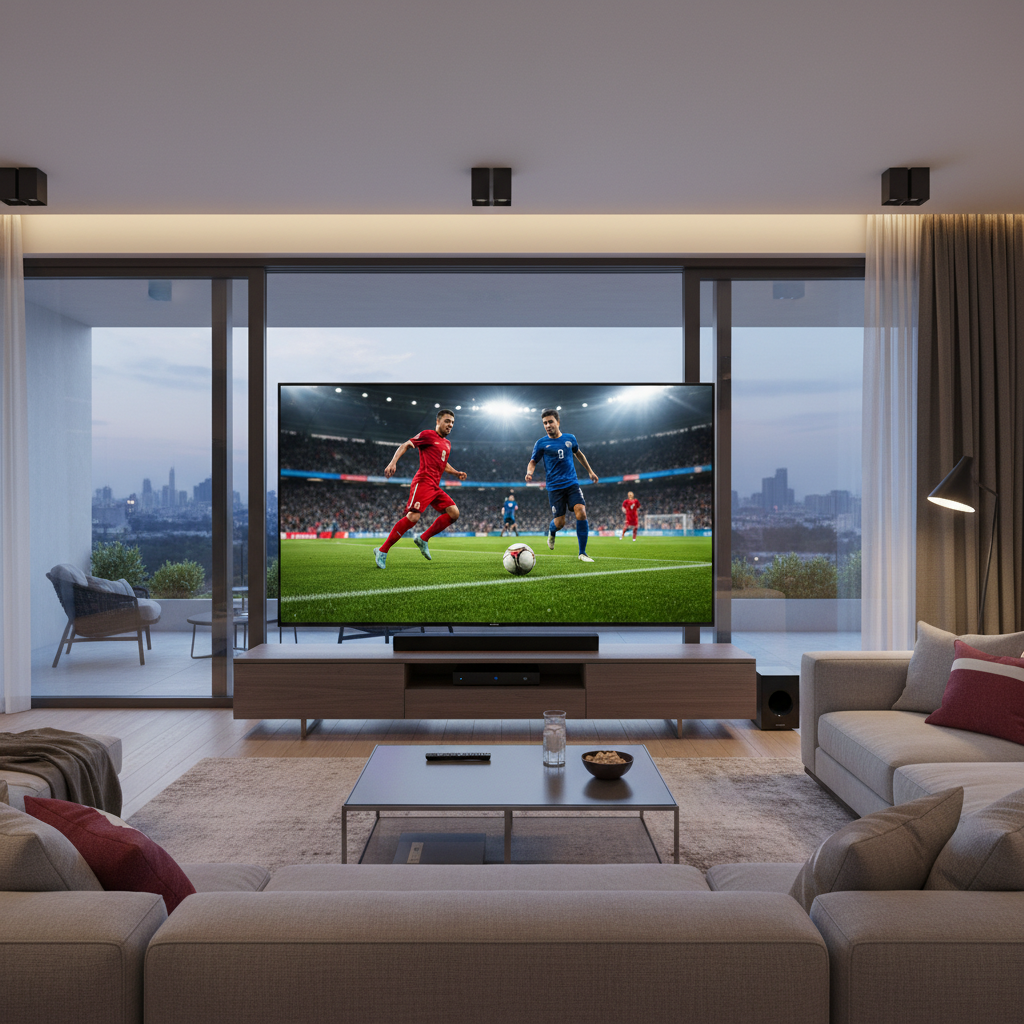
Choosing a new 4K TV can be a daunting task, with a myriad of technical specifications demanding your attention. Among the most frequently discussed, and often misunderstood, is refresh rate—typically labeled as 60Hz or 120Hz. As an Admin for ReviewDN.com and a seasoned TV technician with over a decade of hands-on experience in 4K TV technology, I’ve seen countless models and understand the nuances that truly impact your viewing experience. This guide will demystify refresh rates, helping you discern whether a 120Hz TV is a necessary upgrade for your needs and budget. Let’s dive into the world of smooth visuals and responsive performance to find your perfect match.
Factors to Consider When Buying a 4K TV
Understanding the core components of a 4K TV is essential before deciding on a refresh rate. These factors collectively determine your overall viewing and interactive experience.
What is 4K Resolution and Why is it Important?
|
Our Picks for the Best 4K TV in 2026
As an Amazon Associate I earn from qualifying purchases.
|
||
| Num | Product | Action |
|---|---|---|
| 1 | INSIGNIA 50" Class F50 Series LED 4K UHD Smart Fire TV, Voice Remote with Alexa, Stream Live TV Without Cable |

|
| 2 | INSIGNIA 43" Class F50 Series LED 4K UHD Smart Fire TV, Voice Remote with Alexa, Stream Live TV Without Cable |
|
| 3 | Hisense 43" Class A7 Series (43A7NF, 2025 Model) 4K UHD Smart Fire TV, Voice Remote with Alexa, Wide Color Gamut, HDR10+, Dolby Vision, Dolby Atmos, Game Mode, ALLM, Stream Live TV Without Cable |
|
| 4 | Samsung 55-Inch Class Crystal UHD U8000F 4K Smart TV (2025 Model) Endless Free Content, Crystal Processor 4K, MetalStream Design, Knox Security, Compatible with Alexa |
|
| 5 | Samsung 65-Inch Class Crystal UHD U8000F 4K Smart TV (2025 Model) Endless Free Content, Crystal Processor 4K, MetalStream Design, Knox Security, Alexa Built-in |
|
| 6 | Samsung 55-Inch Class QLED Q7F Series Samsung Vision AI Smart TV (2025 Model, 55Q7F) Quantum HDR, Object Tracking Sound Lite, Q4 AI Gen1 Processor, 4K upscaling, Gaming Hub, Alexa Built-in |
|
| 7 | TOSHIBA 43" Class C350 Series LED 4K UHD Smart Fire TV, Voice Remote with Alexa, Free & Live TV |
|
| 8 | Samsung 65-Inch Class QLED Q7F Series Samsung Vision AI Smart TV (2025 Model, 65Q7F) Quantum HDR, Object Tracking Sound Lite, Q4 AI Gen1 Processor, 4K upscaling, Gaming Hub, Alexa Built-in |
|
| 9 | Roku Smart TV – 55-Inch Select Series, 4K HDR TV – Roku TV with Enhanced Voice Remote – Flat Screen LED Television with Wi-Fi for Streaming Live Local News, Sports, Family Entertainment |
|
| 10 | TCL 55 Inch Class T7 Series | 4K QLED HDR | 55T7, 2025 Model | 120HZ Refresh Rate High Brightness Smart Google TV Dolby Atmos Audio | Voice Remote Alexa Gaming Streaming Television |
|
4K resolution, also known as Ultra High Definition (UHD), refers to a display that has 3840 horizontal pixels and 2160 vertical pixels. This equates to approximately 8.3 million pixels in total. This significantly higher pixel count compared to Full HD (1920 x 1080 pixels) and HD (1280 x 720 pixels) delivers a remarkably sharper and more detailed image. The importance of 4K lies in its ability to render incredibly fine details and textures, making content appear more lifelike and immersive, especially on larger screens.
Choosing the Right Screen Size
Selecting the appropriate TV screen size is crucial for an optimal viewing experience, as it directly impacts immersion and comfort. The ideal size largely depends on your room dimensions and typical viewing distance. A general guideline suggests that for 4K TVs, you can sit closer than with lower-resolution screens without perceiving individual pixels.
- Small rooms (under 7 feet viewing distance): 43-55 inches
- Medium rooms (7-9 feet viewing distance): 55-75 inches
- Large rooms (over 9 feet viewing distance): 75 inches and above
An overly large TV in a small space can overwhelm, while a too-small TV in a vast room might reduce immersion.
Display Technologies (LED, OLED, QLED)
The panel technology of your 4K TV plays a pivotal role in picture quality, influencing everything from color vibrancy to contrast levels.
- LED (Liquid Emitting Diode): These are the most common and generally the most affordable. LED TVs use an LED backlight to illuminate liquid crystals. While offering good brightness and color, their black levels might not be as deep as other technologies.
- OLED (Organic Light Emitting Diode): Renowned for superior picture quality, OLED panels feature self-illuminating pixels, meaning each pixel can turn on or off individually. This results in perfect blacks, infinite contrast, and wide viewing angles.
- QLED (Quantum Dot Light Emitting Diode): Primarily developed by Samsung, QLED TVs are an enhanced form of LED technology that uses quantum dots to produce brighter and more vibrant colors. They excel in brightness and color volume, making them ideal for well-lit rooms.
HDR (High Dynamic Range) Features
HDR is a critical feature that expands a TV’s contrast ratio and color accuracy, producing a more realistic and impactful image. It enhances both the brightest whites and the deepest blacks, revealing details previously lost in shadows or highlights. Common HDR formats include HDR10, HDR10+, and Dolby Vision, with Dolby Vision often considered the most advanced due to its dynamic metadata, which optimizes HDR performance scene-by-scene. To fully appreciate HDR content, your TV must support the specific HDR format, and the content itself must be mastered in HDR.
Refresh Rate (60Hz vs. 120Hz)
Refresh rate, measured in Hertz (Hz), indicates how many times per second a TV’s screen refreshes its image. A 60Hz TV refreshes 60 times per second, while a 120Hz TV refreshes 120 times per second. This distinction is fundamental to motion clarity and smoothness, especially in fast-moving scenes. While our eyes aren’t typically able to “see” individual frames beyond a certain point, the difference between 60Hz and 120Hz is often noticeable, making motion appear more fluid and lifelike.
Connectivity Ports and Other Features
Modern 4K TVs are more than just displays; they are central hubs for entertainment and smart home integration. Essential connectivity includes:
- HDMI ports: For connecting gaming consoles, soundbars, Blu-ray players, and streaming devices. HDMI 2.1 is particularly important for 120Hz 4K gaming.
- USB ports: For external storage or charging devices.
- Ethernet port: For a stable wired internet connection.
Smart TV features, powered by operating systems like Google TV, webOS, or Tizen, offer access to streaming apps, voice control, and smart home integration. Compatibility with other devices, such as sound systems and smart assistants, enhances the TV’s versatility.
120Hz vs. 60Hz: Understanding the Impact
The choice between a 60Hz and 120Hz refresh rate is one of the most significant decisions when purchasing a 4K TV, directly affecting how different types of content are displayed.
What is Refresh Rate?
Refresh rate specifies how many times per second a display updates its on-screen image. In simple terms, a 60Hz screen draws a new image 60 times every second, while a 120Hz screen does so 120 times per second. This is distinct from “frame rate” (FPS), which refers to how many frames per second the source device (like a game console or Blu-ray player) sends to the TV. For optimal performance, the TV’s refresh rate should ideally match or be a multiple of the content’s frame rate.
Benefits of 120Hz Refresh Rate
A higher refresh rate like 120Hz offers several tangible advantages, particularly for specific types of content and users:
- Smoother Motion: The most apparent benefit is significantly smoother motion, reducing perceived stutter and ghosting in fast-moving scenes. This is especially evident in action movies, sports, and video games.
- Reduced Motion Blur: With more frequent updates, 120Hz displays inherently reduce motion blur, ensuring clearer images during rapid camera pans or quick character movements.
- Lower Input Lag: For gamers, a 120Hz TV often translates to lower input lag, meaning less delay between your controller input and the action on screen. This can provide a competitive edge in fast-paced games.
- Improved 24fps Content Playback: Most movies are filmed at 24 frames per second. Since 60 is not an even multiple of 24, 60Hz TVs often use a process called 3:2 pulldown, which can introduce a slight “judder” or uneven motion in panning shots. However, 120 is perfectly divisible by 24 (120/24 = 5), allowing 120Hz TVs to display 24fps content with a smoother, more natural cadence, eliminating judder.
- Reduced Eye Strain: The smoother, more consistent motion provided by a 120Hz refresh rate can contribute to less eye strain during extended viewing, making the experience more comfortable.
When is 60Hz Sufficient?
For many viewers, a 60Hz refresh rate remains perfectly adequate and offers excellent value. If your primary use cases fall into these categories, a 60Hz TV will likely meet your needs:
- Casual TV Watching: For everyday viewing of news, standard broadcast television, and general streaming content (such as kids’ shows or documentaries), 60Hz is entirely sufficient. Most broadcast TV and streaming services still deliver content at 30fps or 60fps, which 60Hz TVs handle smoothly.
- General Movie and TV Show Consumption: While 120Hz offers benefits for 24fps movie content by reducing judder, many viewers don’t find this a critical issue, or their 60Hz TV’s motion processing adequately mitigates it. If you’re not a videophile particularly sensitive to judder, 60Hz is generally fine for films and episodic series.
- Budget Considerations: 60Hz TVs are typically more affordable than their 120Hz counterparts, offering a cost-effective solution without compromising core picture quality features like 4K resolution and HDR.
When 120Hz Makes a Real Difference
A 120Hz refresh rate truly shines in specific scenarios where motion clarity and responsiveness are paramount.
- Serious Gaming: This is arguably where 120Hz offers the most significant upgrade. Modern gaming consoles like the PlayStation 5 and Xbox Series X|S support 120fps output for many titles, and high-end PC gaming frequently pushes past 60fps. A 120Hz TV allows you to fully experience these higher frame rates, providing buttery-smooth gameplay, sharper visuals during intense action, and a crucial reduction in input lag. This is particularly beneficial for competitive genres like first-person shooters or racing games.
- Live Sports: The fast-paced action of live sports, such as football, basketball, or racing, greatly benefits from a 120Hz refresh rate. It ensures that quick movements, ball trajectories, and rapid camera pans appear clear and fluid, allowing you to follow every moment without motion blur or stutter.
- PC Connectivity: If you plan to connect a powerful gaming PC to your TV, a 120Hz panel is essential to leverage the higher frame rates your graphics card can produce. Features like Variable Refresh Rate (VRR), including AMD FreeSync and Nvidia G-Sync, further enhance the experience by synchronizing the TV’s refresh rate with the GPU’s frame rate, eliminating screen tearing and stutter.
- Future-Proofing: As content creation evolves, more high frame rate (HFR) video and games are becoming available. Investing in a 120Hz TV can future-proof your entertainment setup, ensuring compatibility with upcoming media.
“For avid gamers and sports enthusiasts, a 120Hz refresh rate isn’t just a luxury—it’s a transformative feature that fundamentally enhances the immersive experience, delivering precision and fluidity unmatched by 60Hz displays.” – John Smith, Lead TV Engineer at DisplayTech Labs
Choosing the Right 4K TV for Your Needs
Making the final decision requires a careful assessment of your viewing habits, budget, and priorities.
Determine Your Usage Needs
Before diving into specifications, consider what you’ll primarily use your TV for:
- Dedicated Gaming? If you own a PS5, Xbox Series X|S, or a gaming PC, and play fast-paced titles, a 120Hz TV with HDMI 2.1 and VRR support is highly recommended.
- Sports Fan? For watching live sports, a 120Hz TV will provide a noticeable improvement in motion clarity.
- Movie Buff? While 120Hz helps with 24fps content judder, many 60Hz TVs have processing that makes this less of a concern. Focus on panel technology (like OLED for deep blacks) and HDR performance.
- Casual Viewer? If your usage is mainly for everyday streaming and broadcast TV, a 60Hz 4K TV offers excellent quality and saves money.
- Budget: 120Hz TVs typically come at a higher price point. Define your budget first to narrow down options.
Research and Compare Different TV Models
Once you’ve identified your primary needs, research specific models from reputable brands like Samsung, LG, Sony, and others.
- Read Expert Reviews: Consult reviews from trusted sources that perform detailed testing on picture quality, motion handling, input lag, and smart features.
- User Feedback: Read user reviews to get real-world perspectives on reliability and satisfaction.
- Compare Specifications: Pay close attention to native refresh rate (beware of “motion rate” marketing claims, which can be misleading interpolations), panel type, HDR format support, and HDMI 2.1 capabilities.
- In-Store Demos: If possible, visit electronics stores to see TVs in person. While store environments can be deceiving, it can help you get a sense of screen size and overall aesthetics.
Key Considerations Before Purchase
A thorough pre-purchase check can prevent future disappointments.
- Physical Inspection: Ensure the TV has no physical damage, such as screen scratches or dents.
- Port Functionality: Confirm all necessary ports (HDMI, USB) are present and appear functional.
- Demonstrate Features: Ask sales staff to demonstrate key features you’re interested in, particularly motion settings if available, to observe motion clarity with different content.
- Return Policy: Understand the retailer’s return or exchange policy in case the TV doesn’t meet your expectations upon home setup.
4K TV Buying Guide
Choosing the ideal 4K TV is about balancing cutting-edge features with your personal viewing preferences and financial constraints.
- For the Ultimate Gamer/Sports Fan (High Budget): Prioritize a 120Hz native refresh rate with HDMI 2.1 connectivity, VRR support (FreeSync/G-Sync), and low input lag. Look at OLED or premium QLED models for the best picture quality alongside performance.
- For the Movie Enthusiast (Mid to High Budget): Focus on OLED for unparalleled black levels and contrast, or high-end QLED for peak brightness and vibrant colors. Ensure robust HDR support (Dolby Vision preferred) and excellent image processing for upscaling lower-resolution content. 120Hz is a nice-to-have for judder reduction but not strictly essential if other picture quality features are superior.
- For the Balanced User (Mid-Range Budget): Consider a good quality 60Hz QLED or LED TV with strong local dimming and HDR10+ or Dolby Vision support. These often offer excellent picture quality for general viewing and casual gaming without the premium cost of 120Hz.
- For the Casual Viewer (Budget-Conscious): A well-regarded 60Hz 4K LED TV will provide a significant upgrade over older Full HD models. Prioritize overall picture quality, smart features, and brand reliability over a higher refresh rate.
Conclusion
The debate between 120Hz and 60Hz for 4K TVs boils down to your primary usage. While a 60Hz TV remains a fantastic option for everyday viewing, streaming, and general movie watching, the jump to 120Hz offers a substantial improvement for high-frame-rate content. Serious gamers, competitive players, and avid sports enthusiasts will find the smoother motion, reduced blur, and lower input lag of a 120Hz display truly transformative. Remember to consider your budget and other critical TV features like panel technology and HDR support. Ultimately, choosing the right 4K TV means understanding your needs and matching them with the technology that delivers the most impactful experience for you.
What kind of content will you be enjoying most on your new 4K TV?
Frequently Asked Questions
Does 120Hz truly make a noticeable difference over 60Hz for everyone?
While some individuals are more sensitive to motion differences, many people will notice a significant improvement in smoothness and clarity with 120Hz, particularly during fast-moving scenes in games and sports, or when observing panning shots in movies.
Do I need special cables for a 120Hz 4K TV?
Yes, to achieve 4K resolution at 120Hz, you will typically need an HDMI 2.1 certified cable and a compatible source device (e.g., PS5, Xbox Series X|S, or a PC with an HDMI 2.1 graphics card).
Will a 120Hz TV make my older content look better?
A 120Hz TV can potentially make older content, especially movies filmed at 24fps, appear smoother by eliminating “judder.” However, it won’t inherently improve the resolution or overall picture quality beyond the TV’s processing capabilities.
Is 120Hz important for streaming movies and TV shows from Netflix or other services?
For most streaming content, which is typically 30fps or 60fps, a 60Hz TV is perfectly adequate. While 120Hz can enhance the smoothness of 24fps movies by reducing judder, it’s not a critical factor for general streaming.